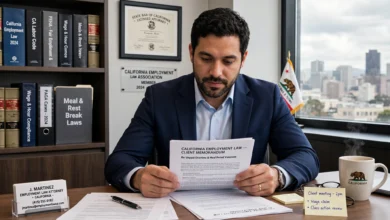
Employment Lawyers Los Angeles: Workplace Discrimination Experts
Facing bias at work? Our Employment Lawyers Los Angeles guide breaks down workplace discrimination rights, deadlines, and how to pick the right attorney.

Employment lawyers Los Angeles residents turn to aren’t hard to find, but finding the right one is a different story. If you’ve been passed over for a promotion because of your age, written up right after you complained about harassment, or fired days after announcing a pregnancy, you already know something isn’t right. What you probably don’t know is how much protection California law actually gives you, or how short the window can be to act on it.
This guide walks through what workplace discrimination looks like in real workplaces (not just legal textbooks), the laws that protect Los Angeles employees, and what separates a genuinely skilled employment discrimination lawyer from a firm that just runs ads. We’ll cover the Fair Employment and Housing Act, the federal laws that work alongside it, filing deadlines you can’t afford to miss, the kinds of compensation available, and the practical steps to take before you ever set foot in an attorney’s office. Los Angeles County is home to millions of workers and an enormous range of employers, from studio backlots to warehouses to small family businesses, and discrimination doesn’t discriminate by industry. Whatever your job title, if you’ve been treated unfairly because of who you are, there’s a legal path forward, and it starts with understanding your rights.
What Counts as Workplace Discrimination in Los Angeles
Before hiring anyone, it helps to know what actually qualifies as illegal treatment versus what’s just an unpleasant workday. Workplace discrimination happens when an employer makes a job-related decision (hiring, firing, pay, promotion, discipline, scheduling) based on a protected characteristic rather than job performance.
Under California law, protected characteristics include:
- Race, color, and national origin
- Religion or religious creed
- Sex, gender, gender identity, and gender expression
- Sexual orientation
- Age (40 and older)
- Physical or mental disability
- Pregnancy, childbirth, or related medical conditions
- Marital status
- Military or veteran status
- Genetic information
- Immigration status (in most circumstances)
California’s list is longer than the federal list, which is one reason employment lawyers Los Angeles clients hire often build cases under state law first. Discrimination can be obvious, like a manager making slurs, or subtle, like consistently assigning the worst shifts to employees of a certain age while calling it “just how the schedule worked out.” Both are illegal when the protected characteristic is the real reason behind the decision.
Disparate Treatment vs. Disparate Impact
There are two main legal theories behind most discrimination claims, and understanding the difference matters when building a case:
- Disparate treatment — An employer intentionally treats one employee worse than others because of a protected trait. Example: two employees make the same mistake, but only the older employee gets fired.
- Disparate impact — A policy looks neutral on paper but disproportionately harms a protected group in practice. Example: a strength or height requirement that isn’t actually necessary for the job but screens out most female applicants.
A skilled workplace discrimination attorney knows how to identify which theory fits your situation, and sometimes a case involves both.
The Laws That Protect Los Angeles Workers
Los Angeles employees are covered by a layered system of protections: federal statutes set a floor, and California law raises the ceiling considerably higher.
Federal Protections
- Title VII of the Civil Rights Act of 1964 — Bars discrimination based on race, color, religion, sex, or national origin for employers with 15 or more employees.
- Age Discrimination in Employment Act (ADEA) — Protects workers 40 and older from age-based decisions.
- Americans with Disabilities Act (ADA) — Requires reasonable accommodations and bars discrimination against qualified workers with disabilities.
- Equal Pay Act — Prohibits paying men and women differently for substantially equal work.
- Genetic Information Nondiscrimination Act (GINA) — Prevents employers from using genetic information in employment decisions.
You can read the federal agency’s own explanation of these protections directly from the U.S. Equal Employment Opportunity Commission, which enforces these laws nationwide.


California’s Fair Employment and Housing Act (FEHA)
FEHA is the backbone of most employment discrimination cases filed in Los Angeles, and for good reason. It:
- Applies to employers with just five or more employees, catching many small businesses that federal law misses.
- Extends harassment and retaliation protections to independent contractors, unpaid interns, and volunteers.
- Uses a lower bar for what counts as a “disability,” meaning conditions that fall short of federal standards may still be protected in California.
- Covers a broader list of protected categories than federal law, including gender identity, gender expression, and marital status.
The state agency that enforces FEHA is the California Civil Rights Department (CRD), formerly known as the Department of Fair Employment and Housing. You can view current guidance, complaint procedures, and enforcement priorities directly on the California Civil Rights Department’s official website.
Because FEHA covers more workers and more situations, an experienced Los Angeles employment attorney will almost always evaluate whether a state claim, a federal claim, or both apply before filing anything.
Filing Deadlines: Why Speed Matters
One of the most damaging mistakes employees make is waiting too long to act. Discrimination claims run on strict clocks, and missing a deadline can permanently bar an otherwise strong case.
- California Civil Rights Department (CRD): You generally have three years from the date of the discriminatory act to file a complaint.
- Equal Employment Opportunity Commission (EEOC): Federal charges must typically be filed within 300 days in California (since the state has its own enforcement agency).
- Right-to-sue letters: Before filing a lawsuit, you usually need a right-to-sue letter from the CRD or EEOC. Once you receive an EEOC right-to-sue letter, you generally have 90 days to file suit. A CRD right-to-sue letter based on state law claims typically gives you one year.
- Equal Pay Act claims: These have their own timeline, generally two years from the last discriminatory paycheck, or three years for willful violations, and don’t require an agency complaint first.
These numbers shift depending on the specific law involved, which is exactly why guessing at deadlines on your own is risky. A workplace discrimination lawyer can pinpoint which deadline applies to your specific facts and make sure nothing gets missed while memories and documentation are still fresh.
What Damages Are Available in a Discrimination Case
People often assume a discrimination claim is only about getting an apology or a policy change. In reality, California law allows for real financial recovery, and in serious cases, it can be substantial.
Possible remedies include:
- Back pay — Wages and benefits lost from the point of the discriminatory action forward.
- Front pay — Compensation for future lost earnings if reinstatement isn’t practical.
- Emotional distress damages — Compensation for the psychological toll of discrimination or harassment.
- Punitive damages — Awarded in cases involving malice, oppression, or fraud by the employer.
- Attorney’s fees and costs — Often recoverable under FEHA if the employee wins.
- Reinstatement or policy changes — Getting your job back, or requiring the employer to fix the practices that caused harm.
Here’s a detail that surprises a lot of people: federal law caps compensatory and punitive damages at $300,000 for larger employers under Title VII. California law imposes no such cap under FEHA. That’s a major reason Los Angeles County juries have handed down multi-million-dollar verdicts in serious discrimination cases, and it’s a major reason employers take FEHA claims seriously.
Common Types of Workplace Discrimination Cases in LA
Los Angeles’ economy spans entertainment, healthcare, logistics, retail, hospitality, and tech, and discrimination shows up differently across each. Some of the most frequent case types include:
Racial and National Origin Discrimination
Unequal discipline, being passed over for promotions, being mocked for accents, or facing hostility tied to immigration status. These cases often overlap with harassment claims when the conduct is severe or repeated.
Gender and Pregnancy Discrimination
Being demoted, pushed out, or denied accommodations after announcing a pregnancy is illegal under both FEHA and federal pregnancy discrimination law. Gender-based pay gaps also fall under this category.
Disability Discrimination
Employers must engage in an “interactive process” to find reasonable accommodations for employees with disabilities. Refusing to do so, or firing someone instead of accommodating them, is a common basis for claims.
Age Discrimination
Workers 40 and older are frequently targeted during layoffs, restructurings, or “culture fit” hiring decisions that quietly favor younger candidates.
Sexual Orientation and Gender Identity Discrimination
California explicitly protects LGBTQ+ workers, and cases here often involve harassment, misgendering, denial of benefits, or retaliation after coming out at work.
Retaliation
This is one of the most commonly filed claims with the CRD. It happens when an employer punishes an employee for reporting discrimination, filing a complaint, or participating in an investigation, even if the underlying discrimination claim is never proven.
What a Workplace Discrimination Expert Actually Does
A good employment discrimination lawyer does far more than send an angry letter to your employer. Here’s what the process typically looks like:
- Case evaluation — Reviewing your story, timeline, and any documentation (emails, texts, performance reviews, pay stubs) to determine if you have a viable claim.
- Evidence gathering — Identifying witnesses, requesting personnel files, and preserving digital evidence before it disappears.
- Agency filing — Preparing and filing your complaint with the CRD, EEOC, or both, and requesting a right-to-sue letter when appropriate.
- Negotiation — Many cases resolve through mediation or settlement negotiations before ever reaching a courtroom.
- Litigation — If a fair settlement isn’t offered, filing suit and representing you through depositions, motions, and trial if necessary.
Most reputable employment lawyers Los Angeles workers hire operate on a contingency fee basis, meaning you don’t pay attorney’s fees unless they win your case. This matters because it removes the financial barrier that keeps a lot of people from ever reporting discrimination in the first place.
How to Choose the Right Employment Lawyer in Los Angeles
Not every attorney who lists “employment law” on their website has deep experience specifically in discrimination cases. When evaluating a potential lawyer, consider:
- Track record with FEHA and Title VII cases specifically, not just general employment matters like wage disputes.
- Trial experience. Most cases settle, but you want a lawyer who isn’t afraid to go to trial if the employer won’t offer fair compensation.
- Familiarity with your industry. Entertainment, healthcare, and warehouse/logistics work each have their own quirks around scheduling, unions, and independent contractor classifications.
- Clear fee structure. Confirm whether they work on contingency and what percentage they take.
- Communication style. You want someone who explains things plainly, not someone who talks over you in legal jargon.
- Language accessibility. Los Angeles is one of the most linguistically diverse counties in the country; firms offering services in Spanish, Korean, Armenian, Mandarin, or Tagalog can be a major advantage for many workers.
A short list of questions to ask during a consultation:
- Have you handled cases like mine before, and what was the outcome?
- What’s my realistic timeline for filing, given my situation?
- What evidence should I start gathering right now?
- Do you take cases to trial, or do you settle everything?
- What’s your fee arrangement, and are there any costs I’d owe regardless of outcome?
Steps to Take Before You Even Call a Lawyer
The strength of a discrimination case often comes down to documentation. Before your first consultation, it helps to:
- Write down what happened while it’s fresh, including dates, times, locations, and who was present.
- Save everything. Emails, texts, Slack messages, performance reviews, and pay records can all matter later.
- Avoid venting on social media about your employer or the incident; it can complicate a case later.
- Report internally if it’s safe to do so. Many claims are stronger when you can show you raised the issue through HR or a manager first.
- Note any witnesses who saw or heard what happened, along with their contact information if possible.
None of this requires a law degree. It just requires treating your own experience as evidence worth preserving.
Why Location-Specific Experience in LA Matters
Los Angeles County isn’t a single labor market; it’s dozens of them stitched together. An attorney who regularly practices in LA understands things that matter in practice: which courts move quickly and which are backlogged, how local juries tend to view certain industries, and which employers have a pattern of repeat complaints. Firms serving areas like Glendale, Encino, Downtown LA, and the greater San Fernando Valley often see recurring issues tied to specific sectors, whether that’s entertainment production schedules, warehouse quota systems, or healthcare staffing shortages. That regional familiarity can shape strategy in ways that a national employment firm without local roots simply won’t have.
Frequently Asked Questions
Do I need five years of documentation to file a claim? No. While strong documentation helps, you don’t need years of records. Even a few clear examples, backed by dates and witnesses, can support a claim.
Can I be fired for filing a discrimination complaint? No. Retaliation for filing a complaint, participating in an investigation, or opposing discrimination is itself illegal under both FEHA and federal law.
What if I’m undocumented? Can I still file a claim? Yes. California protects workers regardless of immigration status, and the CRD does not inquire about immigration status when investigating complaints.
How long does a discrimination case usually take? It varies widely. Some cases settle within months after a demand letter; others, especially those that go to trial, can take one to three years.
What if I’m not sure whether what happened to me was actually illegal? That uncertainty is exactly what a consultation is for. A qualified attorney can tell you within one conversation whether your situation likely rises to the level of an actionable claim.
Conclusion
Workplace discrimination in Los Angeles isn’t rare, and the laws protecting employees here, especially California’s Fair Employment and Housing Act, go well beyond what federal law alone provides. Whether you’re dealing with unfair treatment based on race, gender, disability, age, pregnancy, or retaliation for speaking up, you have real legal options, real deadlines to act within, and real compensation available if your claim succeeds.
The right employment lawyers Los Angeles workers trust will evaluate your situation honestly, explain your options in plain language, and fight for a resolution that reflects what you actually lost, not just what your employer is willing to offer. If something at work has felt wrong, it’s worth a conversation with a qualified workplace discrimination attorney sooner rather than later, because in these cases, time is rarely on your side.