Top Labor Law Attorneys in New York: Union Representation
Looking for labor law attorneys in New York for union representation? Here's how to find one who actually fights for your local.
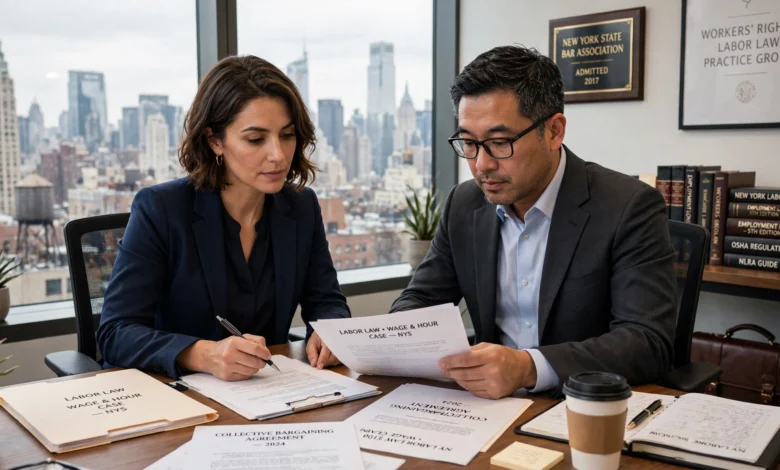
If you’re searching for labor law attorneys in New York, chances are your union is dealing with something that can’t wait: a contract fight that’s stalled, a grievance that’s been ignored, or an employer who’s making organizing harder than it should be. New York has one of the densest concentrations of union activity in the country, and with that comes a deep bench of law firms that focus almost entirely on union representation. But not every labor attorney is the right fit for every union, and the difference between a firm that dabbles in labor law and one that lives in it can show up at the bargaining table, in an arbitration room, or in front of the National Labor Relations Board.
This guide walks through what union-side labor law attorneys in New York actually do, the laws that shape their work, and how to think about picking the right one for your local. We’ll also look at some of the most established firms handling union representation in the state, what typically drives up legal costs, and the questions worth asking before you sign a retainer agreement. Whether you’re a shop steward trying to understand your options or a union officer vetting outside counsel, this should give you a clear, practical starting point.
Why Union Representation Needs a Specialized Labor Law Attorney
Labor law is its own world. It sits apart from general employment law, and the two get confused constantly. Employment law usually deals with individual disputes: a single worker’s discrimination claim, a wrongful termination suit, a wage dispute. Labor law, on the other hand, governs the relationship between organized labor and management as a whole. It covers collective bargaining, union elections, strikes, and the rules that keep employers from interfering with organizing.
A New York labor law attorney who focuses on union-side work understands things a generalist won’t: how arbitrators tend to rule in a given industry, which NLRB regional office handles your cases and how it operates, and how New York’s own labor statutes interact with federal law. That knowledge matters because labor disputes are rarely simple. A single grievance can touch a collective bargaining agreement, a past arbitration decision, and an NLRB charge all at once.
Hiring an attorney who only occasionally handles labor matters is a real risk. Union representation cases move fast, involve strict filing deadlines, and often require someone who already has relationships with the arbitrators, mediators, and agency staff involved. That’s why unions in New York almost always look for firms that describe themselves as union-side labor law attorneys, not general practice firms that happen to take labor cases.
What Labor Law Attorneys in New York Actually Do for Unions
The scope of work is broader than most people expect. Here’s a breakdown of the core services a labor law attorney provides to a union client.
Collective Bargaining Negotiations
This is the heart of union representation. A labor attorney sits alongside union negotiators (and sometimes leads the negotiations directly) to draft, review, and finalize collective bargaining agreements. This includes:
- Structuring wage and benefit proposals so they hold up legally and financially
- Drafting grievance and arbitration clauses that actually protect members
- Reviewing management’s counterproposals for hidden traps
- Advising on strike timing and legal exposure if talks break down
Grievance and Arbitration Support
When a member believes the employer violated the contract, the case usually moves through a grievance procedure and, if unresolved, into arbitration. Attorneys prepare the case, gather evidence, question witnesses, and argue the union’s position in front of the arbitrator. Discipline and discharge grievances make up a large share of this work, since job security is often the single biggest issue members bring to their union.
NLRB Proceedings and Unfair Labor Practice Charges
Employers sometimes cross legal lines when they resist organizing or retaliate against union activity. When that happens, a labor attorney files an unfair labor practice charge with the National Labor Relations Board (NLRB). This can involve investigations, hearings before an administrative law judge, and appeals. Attorneys also represent unions in NLRB-supervised elections, handling petitions, unit determinations, and objections when an employer tries to interfere with the vote.


Union Elections and Internal Governance
Unions have to run their own internal elections fairly, and that’s regulated too. Labor attorneys advise on:
- Officer election procedures under union constitutions and federal law
- Compliance with reporting requirements to the Department of Labor
- Handling internal disputes between members, candidates, or factions
- Trusteeship proceedings when a parent union takes over a local’s affairs
Key Laws Every New York Union Should Know
Understanding the legal framework helps unions work more effectively with their attorney and recognize when something crosses a line.
National Labor Relations Act (NLRA)
The NLRA is the federal law that protects most private-sector employees’ rights to organize, bargain collectively, and engage in protected concerted activity. It also created the NLRB, which enforces the law and oversees union elections. The National Labor Relations Board’s official site lays out the framework for union elections, unfair labor practice proceedings, and collective bargaining disputes in more detail.
New York’s Taylor Law
Public-sector employees in New York, meaning most municipal and state workers, aren’t covered by the NLRA. Instead, they fall under the Taylor Law, formally the New York Public Employees’ Fair Employment Act. It grants public employees the right to organize and bargain collectively but places strict limits on strikes, with real penalties for unions that violate them. Any labor attorney representing public-sector unions in New York needs to know this law inside and out, since it operates very differently from federal labor law.
LMRDA
The Labor-Management Reporting and Disclosure Act (LMRDA), also called the Landrum-Griffin Act, sets rules for internal union democracy. It covers officer elections, financial reporting, and members’ rights within their own union. The U.S. Department of Labor’s Office of Labor-Management Standards oversees compliance, and unions that fall behind on their filings can face investigations. You can review filing requirements directly through the Department of Labor’s LMRDA compliance guidance.
Top Labor Law Attorneys in New York for Union Representation
Based on years of practice history, industry reputation, and the range of union-side work they handle, these firms consistently come up when unions in New York look for outside counsel. This isn’t a ranked list, since the right fit depends on your union’s sector and needs, but each has a long track record.
- Pitta LLP – A New York City firm that has represented labor unions for more than four decades, handling grievance arbitration, collective bargaining, officer elections, and employee benefits matters across a wide range of industries.
- Levy Ratner – Known for supporting union organizing drives and high-profile campaigns, including work tied to the Fight for $15 movement, alongside standard collective bargaining and arbitration work.
- Gladstein, Reif & Meginniss, LLP – Operating since 1976, this firm focuses heavily on organizing drives, NLRB proceedings, and collective bargaining, with attorneys who’ve also served on the NLRB itself.
- Gorlick, Kravitz & Listhaus, P.C. – A union-side firm with offices in Manhattan, Buffalo, and Newark, handling collective bargaining, internal union governance, and litigation across New York State.
- Cary Kane LLP – Represents unions in both private and public sectors, with particular depth in NLRB election matters and ERISA-related benefit plan work.
- Mazzola Mardon, P.C. – Over 50 years of union representation experience, including NLRB and EEOC defense, LMRDA compliance, and officer election oversight.
- O’Dwyer & Bernstien, LLP – A firm with more than a century of history representing New York City unions, covering organizing, picketing campaigns, and unfair labor practice cases.
When comparing firms like these, ask about their experience in your specific industry (healthcare, construction, public sector, and hospitality all have very different bargaining dynamics), their availability for urgent grievance deadlines, and whether they handle both the negotiation and litigation side of a dispute or refer litigation elsewhere.
How to Choose the Right Labor Law Attorney in New York
Picking counsel isn’t just about reputation. Here’s what actually matters when a union is deciding who to hire.
- Sector-specific experience. Public-sector bargaining under the Taylor Law is a different animal than private-sector NLRA work. Make sure the firm has handled cases in your sector recently, not just decades ago.
- NLRB and PERB familiarity. Ask how many cases the attorney has argued before the NLRB or, for public employees, New York’s Public Employment Relations Board (PERB).
- Arbitration track record. Request examples of grievance arbitration outcomes, especially discipline and discharge cases, since these come up constantly.
- Responsiveness. Grievance deadlines are often short. A firm that takes days to return calls can cost your members their case.
- Fee structure. Some firms bill hourly, others work on retainer with the union’s dues structure. Get this in writing before signing anything.
- Long-term relationship, not just a transaction. Labor law attorneys who represent unions well tend to build ongoing relationships, sitting in on strategy sessions and staying available between contract cycles, not just showing up when there’s a crisis.
Common Union Issues That Require Legal Help
Some situations come up often enough that it’s worth knowing when to call an attorney right away rather than trying to handle it internally first.
- Discipline or termination of a member that may violate the collective bargaining agreement
- Employer refusal to bargain in good faith, which can trigger an unfair labor practice charge
- Decertification petitions filed by employees or employers trying to remove the union
- Successorship disputes when a business is sold or restructured and the new employer disputes bargaining obligations
- Union election disputes, whether it’s an NLRB-supervised vote or an internal officer election
- Benefit fund and pension issues, particularly ERISA and Taft-Hartley compliance for multiemployer plans
Cost of Hiring a Labor Law Attorney in New York
Costs vary a lot depending on the size of the union, the complexity of the matter, and whether the firm bills hourly or works under a retainer. Many union-side firms structure fees around ongoing representation, since a local with a standing relationship needs everything from routine grievance handling to occasional major litigation. Hourly rates for experienced union-side attorneys in New York City commonly run from a few hundred dollars up to significantly more for partners at established firms, though arbitration and NLRB matters are sometimes billed at a flat or capped rate. It’s worth asking directly how a firm structures fees for grievance arbitration versus larger matters like decertification fights or complex NLRB litigation, since these can differ significantly.
Frequently Asked Questions
Do I need a labor law attorney if my union already has in-house counsel? Many unions keep outside counsel even with in-house staff, particularly for complex litigation, arbitration, or NLRB matters that require specialized experience or additional capacity during busy periods.
Can a labor law attorney represent both unions and employers? Some firms do represent both sides across different clients, though most established union-side firms work exclusively for labor to avoid conflicts of interest and maintain trust with union clients.
What’s the difference between a labor law attorney and an employment law attorney? Labor law attorneys typically handle collective, union-related matters like bargaining and arbitration, while employment law attorneys usually handle individual employee disputes such as discrimination or wrongful termination claims, though many firms handle both.
How quickly should a union contact an attorney after an unfair labor practice occurs? As soon as possible. NLRB charges have a strict six-month filing deadline from the date of the violation, so waiting too long can eliminate the union’s ability to pursue the claim at all.
Conclusion
Finding the right labor law attorney in New York for union representation comes down to matching your union’s specific needs, whether that’s public-sector bargaining under the Taylor Law, NLRB election work, grievance arbitration, or internal governance compliance, with a firm that has real, recent experience in that exact area.
New York’s union-side legal community includes firms with decades of history and deep sector knowledge, but the best fit depends on your industry, the urgency of your situation, and how the firm structures its fees and availability. Take the time to ask pointed questions about experience, responsiveness, and cost before signing on, since the right attorney can make the difference between a contract that protects your members and one that quietly falls short.