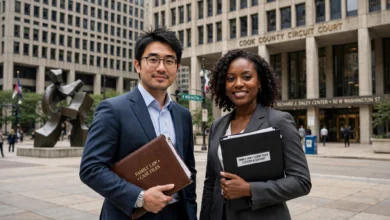
Family Law Attorneys Los Angeles: Divorce and Custody Experts
Family law attorneys Los Angeles clients trust for divorce, custody, and support cases. Clear guidance from experienced local counsel.

Family law attorneys Los Angeles residents hire during a divorce or custody dispute make an enormous difference in how the case turns out, and often in how the family functions for years afterward. Los Angeles County runs one of the busiest family court systems in the country, and its courtrooms handle everything from straightforward uncontested divorces to complicated custody battles involving relocation, business valuations, and international assets. Choosing the right attorney in this environment is not a small decision.
This article breaks down what family law attorneys in Los Angeles actually do, how the divorce and custody process works locally, what it typically costs to hire representation, and how to tell a strong attorney from one who will simply take your retainer and move slowly. Whether you are just starting to think about separation, already served with divorce papers, or trying to modify an existing custody order, the goal here is to give you a realistic, practical picture of what to expect.
Family law is personal in a way most legal work isn’t. The outcome touches your children, your home, your retirement, and your daily schedule. A good divorce lawyer in Los Angeles treats it that way, and a mediocre one treats it like paperwork. By the end of this guide, you should have a clear sense of what separates the two, and what questions to ask before you sign a fee agreement with anyone.
Why Los Angeles Families Need Specialized Family Law Attorneys
California family law is not uniform across the state in practice, even though the underlying statutes are. Local rules, judicial assignments, and courtroom culture vary from county to county, and Los Angeles County has its own quirks. The Los Angeles Superior Court’s family law division is spread across several courthouses, including Stanley Mosk, Chatsworth, and the San Fernando courthouse, and each has different filing procedures, calendar backlogs, and judicial temperaments.
A family law attorney in Los Angeles who practices regularly in these courthouses knows which judges expect detailed declarations, which ones favor mediation before trial, and how long a contested hearing typically takes to get scheduled. That local knowledge matters just as much as legal skill. An attorney flying in from another county, or one who mostly handles other practice areas, will not have this insight, and it can cost you time and money.
Los Angeles also has a higher-than-average share of cases involving:
- Entertainment industry income (royalties, residuals, irregular earnings)
- Business ownership and closely held companies
- High-value real estate and multiple properties
- Cross-border custody issues involving international relocation
- Prenuptial and postnuptial agreements tied to complex estates
If your situation includes any of these, working with a divorce and custody expert who has handled similar cases in LA courts specifically is worth the extra research.
What Family Law Attorneys in Los Angeles Actually Do
The phrase “family law” covers a wide range of legal work, and most family law attorneys Los Angeles clients hire will handle several of these areas within a single case.
Divorce and Dissolution of Marriage
In California, divorce is legally called dissolution of marriage, and it does not require either spouse to prove fault. Either party can file for divorce based on irreconcilable differences, and the other spouse’s agreement is not required to move forward. An attorney manages the petition, financial disclosures, negotiation of a settlement, and, if needed, trial preparation. Dissolution is the formal legal process used to end a marriage or domestic partnership in California, and it covers both standard divorce and a simpler option known as summary dissolution.


Child Custody and Visitation
Custody disputes are often the most emotionally charged part of a case. Attorneys help parents negotiate parenting plans, respond to custody requests, and, when necessary, argue custody matters in front of a judge. Custody is made up of legal custody and physical custody, and both types can be awarded solely to one parent or jointly to both, depending on the family’s circumstances.
Child and Spousal Support
Support calculations in California follow a statutory guideline formula for child support, though judges have discretion over spousal support based on factors like the length of the marriage, each spouse’s earning capacity, and the marital standard of living. A skilled attorney knows how to present income accurately, especially in cases involving self-employment or variable pay.
Division of Property and Debts
California is a community property state, meaning most assets and debts acquired during the marriage are split equally. Attorneys work to correctly classify property as community or separate, which becomes especially important with inherited assets, pre-marital savings, or businesses that grew during the marriage.
Domestic Violence and Restraining Orders
Family law attorneys also assist clients seeking or defending against domestic violence restraining orders, which can directly affect custody and visitation outcomes. This work requires careful documentation and, often, quick action.
How to Choose the Right Family Law Attorney in Los Angeles
Not every attorney with a family law listing is equipped to handle a complicated divorce or custody dispute. Here is what to actually check before hiring one.
- Confirm they practice primarily in family law, not as one of five practice areas they dabble in.
- Ask how many contested custody cases they’ve handled in Los Angeles County courts specifically, not just family law cases generally.
- Look at communication style during the consultation. Do they explain things clearly, or do they speak mostly in jargon?
- Ask about their approach to settlement versus litigation. You want someone who can negotiate but is not afraid to go to trial if that’s genuinely your best option.
- Review the fee structure in writing before you commit, including hourly rates, retainer amounts, and what triggers additional billing.
- Check disciplinary history through the State Bar of California’s attorney search tool.
- Ask who will actually handle your case day to day — a senior partner, an associate, or a paralegal doing most of the work.
A top-rated custody attorney will usually be upfront and specific when answering these questions rather than giving vague reassurances.
The Divorce Process in Los Angeles County: What to Expect
Understanding the general sequence helps you set realistic expectations with your attorney and avoid surprises.
- Filing the petition. One spouse files a Petition for Dissolution (Form FL-100) and has it served on the other spouse.
- Response period. The responding spouse generally has 30 days to file a response.
- Financial disclosures. Both spouses must exchange a Preliminary Declaration of Disclosure, detailing income, assets, and debts.
- Temporary orders. Either party can request temporary orders for support, custody, or use of the family home while the case is pending.
- Negotiation or mediation. Many cases resolve through settlement discussions or formal mediation before ever reaching trial.
- Trial, if needed. If spouses cannot agree, the case proceeds to trial, where a judge decides the remaining issues.
- Judgment. Once finalized, the court enters a judgment of dissolution, and under California law, a divorce cannot be finalized in less than six months from the date the respondent was served.
Divorce in California takes at least six months to finish and generally follows four main steps, whether the couple is married or in a registered domestic partnership. You can review the full process directly through the California Courts Self-Help Guide on the divorce process.
Child Custody in California: Legal vs. Physical Custody
Custody disputes in Los Angeles are decided based on the “best interest of the child” standard, which considers factors like each parent’s ability to care for the child, the child’s health and safety, and, depending on age, sometimes the child’s own preference.
There are two distinct types of custody that a custody attorney in Los Angeles will explain in detail:
- Legal custody covers who makes major decisions about the child’s health care, education, and general welfare. This can be sole or joint.
- Physical custody covers where the child actually lives day to day. This too can be sole or joint, and it directly affects the parenting time schedule.
Courts in Los Angeles generally favor arrangements that keep both parents actively involved unless there’s evidence of abuse, neglect, or another safety concern. For detailed guidance on parenting plans and custody procedures, the California Courts Self-Help Guide on child custody and visitation is an official resource worth reviewing alongside your attorney’s advice.
Cost of Hiring a Family Law Attorney in Los Angeles
Costs vary widely depending on the complexity of the case and the attorney’s experience level. As a general guide:
- Uncontested divorces with no major disputes can sometimes be handled for a flat fee, often in the low thousands of dollars.
- Contested divorces involving custody or property disputes typically run on hourly billing, with rates in Los Angeles commonly ranging from $350 to $700 per hour for experienced counsel.
- High-net-worth or highly contested cases involving forensic accountants, custody evaluators, or extensive litigation can run into the tens of thousands of dollars or more.
Ask any family law attorney in Los Angeles for a written estimate based on your specific circumstances, and get clarity on what’s included in the retainer versus billed separately.
Mediation vs. Litigation: Which Path Fits Your Case
Not every divorce or custody dispute needs to go to trial, and a good attorney will tell you honestly which approach fits your situation.
Mediation works well when both parties are willing to communicate and compromise. It’s usually faster, less expensive, and less stressful than litigation, and it gives both spouses more control over the outcome rather than leaving decisions to a judge.
Litigation becomes necessary when there’s a significant power imbalance, a history of domestic violence, hidden assets, or one party who refuses to negotiate in good faith. In these situations, a courtroom-tested attorney becomes essential, since the case will be decided by a judge based on evidence and legal argument rather than mutual agreement.
Many family law firms in Los Angeles handle both paths and will recommend mediation first when it’s realistic, while preparing the case as though it might go to trial in parallel.
Questions to Ask Before Hiring a Divorce and Custody Attorney
Before signing a retainer agreement, ask:
- How many years have you practiced family law specifically in Los Angeles County?
- What is your experience with cases similar to mine (custody dispute, high-asset divorce, business valuation, etc.)?
- Who on your team will be my main point of contact?
- What is your typical timeline for a case like mine?
- How do you bill for phone calls, emails, and court appearances?
- What is your strategy if the other side refuses to negotiate?
A confident, experienced attorney will answer these directly and without hesitation.
Conclusion
Divorce and custody disputes are stressful enough without also worrying whether your attorney actually understands Los Angeles County’s family court system. The right family law attorneys Los Angeles families rely on combine deep knowledge of California’s community property and custody laws with real, local courtroom experience across LA’s various courthouses.
Whether your case involves a straightforward uncontested divorce, a complex custody dispute, or the division of significant assets, taking the time to vet an attorney’s experience, communication style, and fee structure up front will save you money and stress later. Use the process outlined above, ask the hard questions before signing anything, and lean on official resources like the California Courts Self-Help Guide alongside your attorney’s counsel to make informed decisions at every stage.