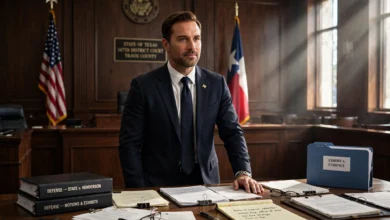
Miami Criminal Lawyers: White Collar Crime Defense
Miami criminal lawyers break down proven white collar crime defense strategies, from fraud to embezzlement, and how to protect your future.

Miami criminal lawyers handle some of the most complicated cases in the legal system, and white collar crime sits near the top of that list. These cases rarely start with a knock on the door and an arrest. They usually start months, sometimes years, before that, with federal agents quietly building a file, interviewing former coworkers, and subpoenaing bank records. By the time someone realizes they’re a target, the government may already have a mountain of evidence.
That’s exactly why finding the right white collar crime defense attorney matters so much in South Florida. Miami is a major financial hub with heavy federal law enforcement presence, including the FBI, IRS Criminal Investigation Division, SEC, and the U.S. Attorney’s Office for the Southern District of Florida. These agencies pursue fraud, embezzlement, money laundering, and public corruption cases aggressively, and they have the resources to do it well.
If you or someone you know is under investigation or has already been charged, understanding how these cases work, what defenses actually hold up in court, and how Miami criminal lawyers approach them can make the difference between a dismissed case and years behind bars. This article walks through the types of white collar charges common in Florida, how a solid defense strategy gets built, what penalties look like, and how to pick an attorney who can actually go toe to toe with federal prosecutors.
What Is White Collar Crime? Understanding the Basics
The term “white collar crime” was coined back in 1939 by sociologist Edwin Sutherland, who used it to describe non-violent offenses committed by people in positions of trust, usually business owners, executives, accountants, and professionals. That definition still holds up today, even though the crimes themselves have gotten a lot more technical.
Unlike a robbery or an assault, white collar crimes don’t involve physical force. Instead, they involve deception, breach of trust, or manipulation of financial systems for personal or business gain. That’s what makes these cases so different to defend. There’s rarely a smoking gun. Instead, prosecutors build their case out of emails, spreadsheets, bank statements, and testimony from former business partners or employees.
Miami criminal lawyers who focus on this area need more than just courtroom experience. They need to understand accounting, banking regulations, securities law, and how federal investigations actually unfold behind the scenes. A lawyer who only handles DUIs or simple assault charges typically isn’t equipped for a multi-agency federal fraud investigation.
Why You Need Miami Criminal Lawyers for White Collar Charges
Here’s something people don’t always realize until it’s too late: by the time you’re arrested or indicted in a white collar case, the government has often already spent months, or years, building its case. Federal agents don’t move quickly. They gather documents, interview witnesses, and sometimes even flip cooperating witnesses before ever approaching the person they’re actually investigating.
This means a few things for anyone facing potential charges:
- The investigation phase matters as much as the trial phase. What you say to an investigator, even informally, can be used against you later.
- Federal cases carry different rules than state cases. Federal sentencing guidelines, mandatory minimums, and prosecutorial discretion work differently than in Florida state court.
- Evidence in these cases is often circumstantial and layered. It takes a lawyer who can pick apart complex financial records to find weaknesses.
- Cooperation deals and plea negotiations are common. Knowing when to negotiate and when to fight is a judgment call that experienced counsel is best positioned to make.
Experienced Miami criminal lawyers, particularly those who’ve worked as former federal prosecutors, understand how the government builds these cases from the inside. That insider knowledge often shapes the entire defense strategy from day one.


Common Types of White Collar Crimes in Florida
Florida, and Miami specifically, sees a high volume of white collar prosecutions because of its position as an international banking and trade center. Below are the charges that show up most often.
Fraud
Fraud charges cover a huge range of conduct, from mortgage fraud and healthcare fraud to wire fraud and mail fraud. Because so much financial activity now happens electronically, wire fraud charges in particular have become one of the most commonly used tools by federal prosecutors, since almost any transaction that crosses state lines electronically can trigger federal jurisdiction.
Embezzlement
Embezzlement involves someone who was legally entrusted with money or property (an employee, executive, or trustee, for example) diverting it for personal use. These cases often start with an internal company audit long before law enforcement ever gets involved.
Money Laundering
Money laundering charges involve disguising the origins of illegally obtained money so it appears to come from a legitimate source. Given Miami’s role as a global financial center, these cases often involve international wire transfers, shell companies, and real estate transactions.
Insider Trading
Insider trading cases arise when someone uses confidential, non-public information about a company to trade stock for personal profit. The SEC and federal prosecutors work closely together on these cases, and they’re notoriously document-heavy.
Tax Evasion
Tax evasion cases are typically pursued by the IRS Criminal Investigation Division and often stem from unreported income, inflated deductions, or offshore account issues. According to the Internal Revenue Service, tax fraud investigations frequently begin as civil audits before escalating into criminal referrals.
Public Corruption and Bribery
Given South Florida’s political landscape, public corruption and bribery cases involving elected officials, government contractors, or public employees are not uncommon. These cases often carry heavy reputational stakes in addition to legal ones.
How Miami Criminal Lawyers Build a Defense Strategy
No two white collar cases look exactly alike, but there’s a general framework that skilled Miami criminal lawyers follow when building a defense.
Investigating the Government’s Case
Before deciding on a strategy, a defense attorney needs to understand exactly what evidence the prosecution has, how they got it, and whether it was obtained legally. This includes reviewing:
- Search warrants and subpoenas used to gather evidence
- Grand jury testimony and witness statements
- Financial records, emails, and internal communications
- Any statements the accused made to investigators before hiring counsel
Challenging Evidence and Search Procedures
If evidence was obtained without a valid warrant, or if investigators overstepped constitutional boundaries, a motion to suppress can significantly weaken the prosecution’s case. This is one of the most powerful tools in white collar crime defense, since these cases live and die by their paper trail. If the paper trail was gathered improperly, the whole case can unravel.
Negotiating with Prosecutors
Not every case goes to trial, and in many white collar cases, negotiation is actually the smarter path. Federal prosecutors often have discretion to reduce charges, agree to pretrial diversion, or recommend lighter sentencing in exchange for cooperation or restitution. A lawyer with prior experience inside a U.S. Attorney’s Office, like several of the attorneys practicing in Miami, often has a clearer read on how far a given prosecutor’s office is willing to bend.
Federal vs. State White Collar Charges in Miami
One of the first things a defense attorney needs to determine is whether a case will be prosecuted in state or federal court, since the two systems operate very differently.
- Federal cases are prosecuted by the U.S. Attorney’s Office and typically involve crimes that cross state lines, use interstate wires, or involve federal agencies like the SEC or IRS. Federal sentencing guidelines are stricter, and federal prosecutors have far more resources than most state agencies.
- State cases are prosecuted under Florida statutes and handled in Miami-Dade County courts. While still serious, state white collar cases sometimes offer more room for negotiated outcomes like pretrial diversion programs.
Because federal cases carry higher stakes and less flexibility once charges are filed, it’s especially important to bring in counsel the moment you learn you’re under investigation, rather than waiting for an indictment.
Penalties for White Collar Crimes in Florida
Penalties vary widely depending on the specific charge, the amount of money involved, and whether the case is prosecuted federally or at the state level. Generally speaking, penalties can include:
- Lengthy federal or state prison sentences, sometimes decades for large-scale fraud schemes
- Substantial fines, which can run into the millions depending on the losses involved
- Restitution payments to victims
- Forfeiture of assets connected to the alleged crime
- Probation or supervised release following incarceration
- Professional consequences, including loss of licenses for doctors, attorneys, financial advisors, or brokers
The Federal Bureau of Investigation notes that white collar crime costs the United States more than $300 billion annually, which is part of why federal agencies dedicate so many resources to investigating and prosecuting these offenses aggressively.
What to Do If You’re Under Investigation
If you suspect you’re the subject of a white collar investigation, whether you’ve received a subpoena, a target letter, or simply heard that investigators have been asking around about you, there are a few things worth doing right away:
- Stop talking to investigators without counsel present. Anything said informally can be used later, even if you believe you’re just clearing things up.
- Preserve all documents and records. Deleting emails or files, even accidentally, can lead to obstruction charges on top of the original allegations.
- Contact an attorney immediately. The earlier a lawyer gets involved, the more options are available, including the possibility of avoiding formal charges altogether.
- Avoid discussing the situation with coworkers or business partners. These conversations are not privileged and can end up in the hands of prosecutors.
- Don’t assume a lack of charges means you’re in the clear. Investigations can remain open and active for a long time before any arrest occurs.
Choosing the Right Miami Criminal Lawyers for Your Case
Not every criminal defense attorney is equipped to handle a complex fraud or financial crimes case. When looking for Miami criminal lawyers to represent you in a white collar matter, a few things are worth checking:
- Federal court experience. Since many of these cases end up in federal court, look for attorneys who regularly appear before federal judges in the Southern District of Florida.
- Prior prosecutorial background. Attorneys who previously worked as Assistant U.S. Attorneys often bring valuable insight into how the government builds and evaluates cases.
- Familiarity with financial and forensic evidence. These cases often hinge on spreadsheets, bank records, and expert testimony, so a lawyer comfortable working with forensic accountants is a real asset.
- Track record with similar charges. Ask specifically about outcomes in cases involving the type of charge you’re facing, whether that’s securities fraud, embezzlement, or tax-related offenses.
- Clear communication. These cases can drag on for months or years. You want an attorney who keeps you informed at every stage rather than leaving you guessing.
Frequently Asked Questions
Do white collar crime cases always go to trial? No. Many are resolved through plea negotiations, pretrial diversion, or, in some cases, the government declining to file charges after reviewing the evidence with defense counsel.
Can I be charged federally and by the state at the same time? Yes, though it’s less common. Some conduct can technically violate both state and federal law, though prosecutors typically choose one venue.
What’s the difference between fraud and embezzlement? Fraud generally involves deception to obtain money or property, while embezzlement involves someone who was legally given access to funds or assets misusing that trust.
How long do white collar investigations typically last? There’s no fixed timeline. Some resolve in months, while more complex cases involving multiple agencies or international transactions can take years before charges are even filed.
Conclusion
White collar crime cases in Miami are some of the most document-heavy, high-stakes matters in the entire criminal justice system, and they require attorneys who understand both the law and the financial mechanics behind the charges. From fraud and embezzlement to money laundering and tax evasion, these cases often begin quietly, long before an arrest ever happens, which makes early legal representation critical.
Skilled Miami criminal lawyers who understand how federal and state prosecutors build their cases, know how to challenge improperly obtained evidence, and can negotiate effectively when it makes sense, give clients the strongest possible chance at protecting their freedom, their finances, and their reputation.