Florida SSDI Lawyers: Denied? Here’s How to Win Your Appeal
Denied SSDI in Florida? Learn why claims get rejected and how Florida SSDI lawyers build winning appeals at every stage.
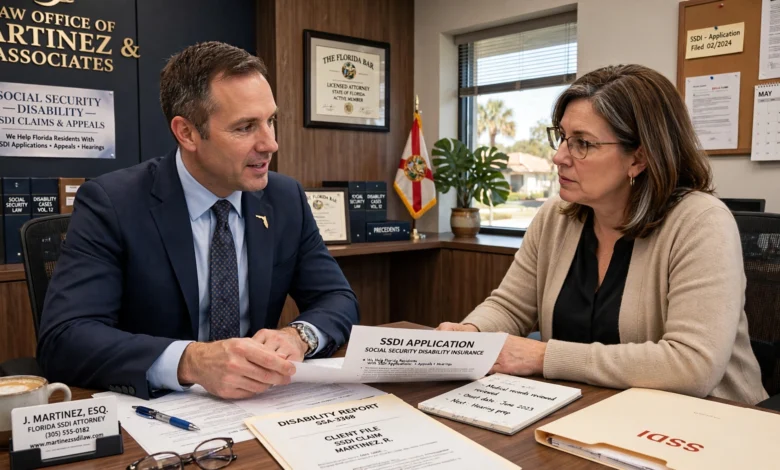
Florida SSDI lawyers see the same scene play out every week: a hardworking person opens a letter from the Social Security Administration, reads the word “denied,” and feels like the floor just dropped out from under them. If that’s you right now, take a breath. A denial is not a final answer. It’s the opening move in a process that most people who eventually win benefits had to go through at least once.
Florida denies the majority of initial SSDI applications, and the numbers are rough no matter how you slice them. Some years the initial approval rate in Florida hovers in the 30-to-40 percent range, which means most first-time applicants, including people with genuinely serious medical conditions, get turned away on the first try. The good news is that the appeals process exists precisely because that first decision is often wrong or incomplete, and claimants who appeal with strong medical evidence and the right legal strategy succeed far more often than those who don’t.
This article walks through why Florida SSDI claims get denied, what each stage of the appeal actually involves, how a Florida SSDI lawyer changes your odds, and what you can do right now to protect your case. Whether you were denied last week or you’re three appeals deep, there’s a path forward, and understanding it is the first step toward walking it.
Why SSDI Claims Get Denied in Florida
Before you can fix a denial, you need to know what actually went wrong. The Social Security Administration doesn’t deny claims at random. Every denial letter cites specific reasons, and in Florida, those reasons tend to fall into a handful of recurring categories.
Florida claims are actually evaluated by Disability Determination Services (DDS), a state agency that makes initial and reconsideration decisions on behalf of the federal SSA. DDS examiners work through a huge volume of files, and that volume creates real problems: missing records, vague job descriptions, and medical evidence that doesn’t clearly connect your diagnosis to your inability to work.
Common Reasons for SSDI Denial
- Insufficient medical evidence — This is the single biggest reason claims fail. If your treatment records are thin, outdated, or don’t include the kind of detailed functional limitations SSA looks for (how long you can sit, stand, lift, concentrate), the examiner has nothing solid to approve.
- Condition doesn’t meet SSA’s definition of disability — SSA requires that your impairment prevent substantial work and be expected to last at least 12 months or result in death. A condition that’s serious but temporary, or one that’s well-managed with treatment, may not clear this bar on paper even if it’s genuinely disabling in your daily life.
- Earning above Substantial Gainful Activity (SGA) limits — In 2026, earning more than roughly $1,690 a month ($2,830 if you’re blind) can disqualify you regardless of your medical condition. Even a short stretch of income above the SGA threshold can trigger a denial if it isn’t properly explained as a failed work attempt.
- Failure to follow prescribed treatment — If your records show you skipped medications, missed appointments, or didn’t pursue recommended therapy without a documented reason (cost, side effects, access issues), SSA may assume your condition isn’t as limiting as claimed.
- Insufficient work credits — SSDI is an insurance program tied to your work history. If you haven’t paid enough into the system recently enough, you may not qualify no matter how disabling your condition is. This is a technical issue, not a medical one, and it requires a completely different fix.
- Failure to cooperate or missed deadlines — Missing a consultative exam, not returning paperwork, or letting a deadline slip can result in an automatic denial that has nothing to do with the merits of your case.
Understanding exactly which of these applies to your situation matters enormously, because the fix for a medical-evidence denial looks nothing like the fix for a work-credits denial. This is one of the first things a Florida SSDI lawyer will pin down when reviewing your file.
The Florida SSDI Appeals Process, Step by Step
Florida follows the same four-level federal appeals structure used across most of the country. Each stage has its own rules, its own deadline, and its own strategy, and skipping or mishandling any one of them can force you to start the entire application over from scratch.
1. Request for Reconsideration
This is your first appeal after an initial denial. You have 60 days from the date on your denial letter to file Form SSA-561, and a different DDS examiner than the one who reviewed your original claim will take a fresh look.
Reconsideration is often treated as a formality, and honestly, the approval rate here tends to be low. But it’s not pointless. It’s your chance to submit new medical evidence, updated records, and additional statements before your case moves further along. Simply resubmitting the same file and hoping for a different outcome rarely works. This stage is really about strengthening the record, not just restating your case.


2. Administrative Law Judge (ALJ) Hearing
If reconsideration is denied, the next step is requesting a hearing before an Administrative Law Judge. This is where the majority of successful appeals actually happen, and it’s also where having a lawyer tends to make the biggest measurable difference.
At an ALJ hearing, you’ll testify about your condition, your daily limitations, and your work history. The judge may also call a vocational expert to testify about whether jobs exist that someone with your specific limitations could perform. This is a formal legal proceeding, not a paperwork review, and it rewards preparation: knowing what questions to expect, how to describe your limitations in the terms SSA regulations actually use, and how to cross-examine a vocational expert when their testimony doesn’t match the medical record.
Because ALJ hearings are where cases are won or lost, this is the stage where claimants without legal representation are at the clearest disadvantage.
3. Appeals Council Review
If the ALJ denies your claim, you can request review by the SSA Appeals Council. The Council doesn’t rehear your case from scratch. Instead, it reviews the ALJ’s decision for legal or procedural errors, meaning your appeal has to identify specific mistakes in how the judge applied the law or weighed the evidence.
The Appeals Council can deny your request for review, send the case back to the ALJ for another hearing, or in rare cases, reverse the decision outright. This stage is heavily legal in nature, which is part of why it’s difficult to navigate without an attorney who understands how to frame an argument the Council will actually act on.
4. Federal District Court
The final stage is filing a civil action in U.S. District Court. This isn’t an SSA process anymore. It’s federal litigation, complete with legal briefs, procedural rules, and a judge who has no background in disability law specifically. Very few claimants reach this stage, and almost none do so without an attorney, because the process is fundamentally different from anything that came before it.
Key Appeal Deadlines to Remember
- You generally have 60 days from the date you receive a denial to file the next level of appeal.
- SSA typically presumes you received the letter 5 days after the date printed on it, so the clock is often shorter than it looks.
- Missing a deadline without a documented good reason can mean starting your entire application over, which can cost you a year or more and forfeit potential back pay.
How a Florida SSDI Lawyer Improves Your Chances
Claimants often ask whether hiring a lawyer is really necessary, especially since attorneys typically work on contingency and take a percentage of back pay only if you win. Here’s the honest answer: you can appeal without one, but the data and the process both point toward representation making a real difference, particularly at the hearing level.
A Florida SSDI lawyer brings a few specific advantages to the table:
- They know exactly why your claim was denied and how to fix it. Denial letters are often written in dense, formulaic language. An experienced attorney reads between the lines to identify the real gap, whether it’s medical, technical, or procedural.
- They build the medical record strategically. This means requesting specific records from treating physicians, obtaining detailed functional capacity statements, and making sure your file tells a coherent, well-documented story rather than a scattered one.
- They understand SSA’s own rulebook. The Social Security regulations are dense, and terms like “residual functional capacity,” “past relevant work,” and “medical-vocational guidelines” carry very specific legal meanings that shape how your case is evaluated.
- They prepare you for testimony. How you describe your limitations at an ALJ hearing matters. A lawyer helps you explain your condition in a way that’s accurate, consistent with your records, and responsive to what the judge is actually assessing.
- They cross-examine vocational experts. At hearings, a vocational expert may testify that jobs exist that you could still perform. An attorney who understands the Dictionary of Occupational Titles and current labor market data can challenge that testimony effectively.
- They handle deadlines and procedure. Every level of appeal has its own forms and timelines. Missing one can undo months of work, and a lawyer’s office exists in part to make sure that never happens.
- They only get paid if you win. Most SSDI attorneys work under a fee agreement approved by SSA, typically a percentage of past-due benefits, capped by federal regulation. That structure means there’s rarely a financial barrier to getting help.
What to Gather Before You Talk to a Lawyer
Whether you’re about to file your first appeal or you’ve been through this before, showing up prepared makes the initial consultation far more productive.
- Your denial letter(s) — Every SSA notice you’ve received, including the specific reasons cited for denial.
- A complete medical provider list — Names, addresses, and approximate treatment dates for every doctor, specialist, hospital, and therapist you’ve seen for your condition.
- Current medications — What you’re taking, dosages, and any side effects that affect your ability to function.
- Work history details — Job titles, duties, physical and mental demands of past positions, and the dates you stopped working.
- A daily activity log — Notes on how your condition limits ordinary tasks like cooking, driving, concentrating, or standing for extended periods.
- Any denial-specific paperwork — Forms like SSA-3441 (Disability Report – Appeal) or SSA-3373 (Function Report) if you’ve already started that process.
Bringing this information to a consultation lets an attorney quickly assess the strength of your case and identify the gaps that need to be closed before your next filing deadline.
SSI vs. SSDI: Why the Distinction Matters in Florida
Florida claimants sometimes aren’t entirely sure whether they applied for SSDI or SSI, and the difference matters because it changes what evidence is relevant. SSDI is an insurance benefit tied to your work history and the taxes you’ve paid into the system. SSI, by contrast, is a needs-based program tied to income and asset limits, generally requiring countable assets under $2,000 for an individual ($3,000 for a couple), excluding a primary home and one vehicle.
Some Florida claimants qualify for both programs simultaneously, and a denial in one doesn’t necessarily affect eligibility for the other. If you’re unsure which program applies to your situation, the Social Security Administration’s official disability benefits overview is a good starting point for understanding the distinction before you appeal.
Common Mistakes That Weaken an SSDI Appeal
Even claimants with legitimate, serious conditions can undermine their own appeal without realizing it. A few patterns show up again and again:
- Waiting too long to appeal. The 60-day clock doesn’t pause for anything. Waiting until the last week to start gathering records puts unnecessary pressure on a process that already moves slowly.
- Submitting the same evidence twice. Reconsideration and hearing appeals need new or updated information, not a repeat of what was already reviewed and rejected.
- Downplaying symptoms during testimony. Some claimants, out of pride or habit, minimize how bad their condition really is when talking to SSA. Judges rely heavily on consistency between your testimony and your medical record, so understating your limitations can actually hurt your case.
- Gaps in treatment. Long stretches without medical care, even for financial reasons, can be read as evidence that a condition isn’t severe. If cost or access is the reason, that needs to be documented and explained.
- Ignoring mental health impact. Physical conditions often come with real mental health consequences, chronic pain, depression, anxiety, but claimants frequently leave that off their paperwork entirely, missing evidence that could strengthen the overall case.
- Not requesting a hearing in time. If reconsideration is denied and the hearing request deadline passes, the claim can be closed permanently, forcing a brand-new application.
How Long Does the Florida SSDI Appeal Process Take?
Timelines vary by region and by SSA’s current backlog, but claimants should plan for a process that unfolds over many months rather than weeks.
- Reconsideration: Typically a few months, though this varies by caseload.
- ALJ hearing: Often the longest stretch, sometimes a year or more from request to decision, due to hearing office backlogs.
- Appeals Council review: Can add many additional months, since the Council handles a large national caseload.
- Federal court: Adds further time, often another year or more, depending on the district’s docket.
This is discouraging to hear, but it’s also exactly why acting quickly at each stage matters. Every month spent waiting for a hearing is a month you can’t get back, and delays in submitting evidence only compound the wait. Filing complete, well-documented appeals the first time, rather than needing to correct or resubmit later, is one of the most effective ways to shorten the overall timeline. For general guidance on federal disability rules that apply nationwide, the U.S. government’s official disability benefits resource at USA.gov is a useful reference point alongside advice from your attorney.
Choosing the Right Florida SSDI Lawyer for Your Appeal
Not every disability attorney handles cases the same way, and picking the right one for your specific situation is worth some care.
- Look for SSDI-specific experience, not just general personal injury or disability work. The appeals process has its own procedures and its own body of case law.
- Ask about their hearing experience. Since ALJ hearings are where most successful appeals happen, ask how many hearings they’ve handled and how familiar they are with your local hearing office.
- Confirm the fee structure up front. Reputable SSDI attorneys work on contingency, typically taking a percentage of back pay only if you win, subject to a cap set by federal regulation. You shouldn’t be asked to pay significant fees out of pocket just to get started.
- Ask who will actually handle your case. Some firms hand cases off to paralegals or case managers for most of the process. Understand who prepares your file and who represents you at the hearing itself.
- Trust your communication with them. You’ll be sharing detailed medical and personal information over what could be a year or more. Choose someone who explains things clearly and responds to your questions without making you feel rushed.
Frequently Asked Questions
Can I still appeal if I missed the 60-day deadline? In some cases, SSA allows a late appeal if you can show “good cause,” such as a serious illness, hospitalization, or a documented failure to receive the denial notice. This isn’t guaranteed, so it’s worth discussing with an attorney immediately rather than assuming your options are closed.
Do I have to attend the ALJ hearing in person? Many hearings are now offered by phone or video in addition to in-person options. Your notice of hearing will explain the available formats, and an attorney can help you decide which is best for your case.
Will I get back pay if I win my appeal? Yes. SSDI back pay generally covers the period from your established onset date (or application date, depending on the program) through the date of approval, which is part of why contingency fee structures work the way they do.
What if my condition has gotten worse since I applied? Updated medical evidence showing a worsening condition can be one of the strongest additions to an appeal. Make sure any new diagnoses, hospitalizations, or treatment changes are documented and shared with your attorney right away.
Final Thoughts
A denial letter from Social Security feels final, but for the majority of Florida claimants, it’s just one step in a longer process, not the end of it. The reasons behind SSDI denials in Florida are usually specific and fixable, whether that means gathering stronger medical evidence, correcting a technical work-credit issue, or preparing more effectively for an ALJ hearing where most successful appeals actually happen. Each stage of the appeal, from reconsideration through federal court, comes with its own deadlines and its own strategy, and missing a step can cost months or force a restart.
Working with an experienced Florida SSDI lawyer, most of whom take cases on contingency, gives you a real advantage: someone who understands SSA’s rules, knows how to build a compelling record, and can advocate for you directly in front of a judge. If you’ve been denied, the smartest next move is simple. Don’t wait out the clock. Gather your records, understand exactly why your claim was rejected, and talk to someone who handles these appeals for a living.