Manchester Disability Benefits Solicitors: Tribunal Representation
Manchester disability benefits solicitors help you challenge PIP, ESA and UC decisions and prepare for tribunal with confidence.
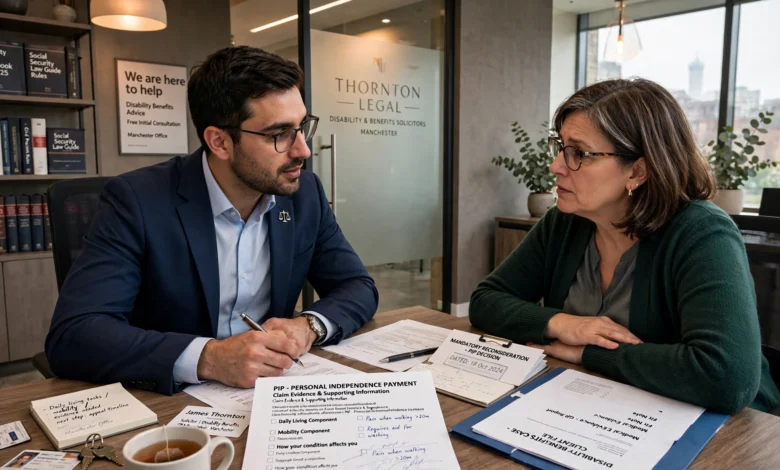
Manchester disability benefits solicitors are the people you call when a PIP, ESA or Universal Credit decision has gone wrong and you’re staring down the barrel of a tribunal hearing. If you’re reading this, there’s a good chance you’ve already been through the wringer: a face-to-face or telephone assessment that didn’t reflect your actual daily life, a decision letter that made no sense, and a mandatory reconsideration that came back unchanged. It’s an exhausting process, and it’s designed in a way that wears people down.
Here’s the encouraging part. Tribunals genuinely do overturn a lot of these decisions. Recent HM Courts and Tribunals Service figures show that around 64% of PIP appeals that reached a tribunal hearing were decided in the claimant’s favour in the most recent quarter on record. That’s not a fluke, and it’s not because the system is broken (though plenty of people would argue it is). It’s because the original assessment often misses or misrepresents the reality of someone’s condition, and a tribunal gives you a proper chance to put that right, in front of a panel that includes a doctor and a disability-qualified member, not just a case manager working through a checklist.
This article walks through what disability benefits solicitors in Manchester actually do, how tribunal representation works from start to finish, what it costs, and how to pick the right person to stand beside you. Whether you’re dealing with a PIP appeal, an ESA tribunal, or a Universal Credit dispute, the goal here is to give you a clear, honest picture so you can make a decision that’s right for you.
What Do Manchester Disability Benefits Solicitors Actually Do?
A lot of people assume a solicitor just turns up on the day and does the talking. That’s part of it, but it’s the smaller part. Good Manchester disability benefits solicitors do most of their heavy lifting long before the hearing date arrives.
Their work typically covers:
- Reviewing the DWP’s decision and the mandatory reconsideration notice to work out exactly where the assessment went wrong, whether that’s a misapplied descriptor, an assessor who ignored medical evidence, or a factual error.
- Gathering and organising evidence, including GP letters, consultant reports, care plans, medication records, and statements from carers or family members who see your day-to-day reality.
- Drafting the appeal submission (form SSCS1) and the written grounds of appeal, which is the single most important document in the whole process because it frames the argument the tribunal will read before you ever say a word.
- Requesting the right kind of hearing. An oral hearing, whether in person, by phone, or by video, tends to produce far better outcomes than a paper-only decision, because the panel can actually see and question you.
- Preparing you for the hearing itself, including a run-through of likely questions and how to describe your condition in the terms the tribunal is actually assessing (this matters more than people expect).
- Representing you at the tribunal, presenting your case, questioning any DWP presenting officer where relevant, and making sure nothing important gets missed or misunderstood.
- Advising on next steps if the tribunal doesn’t go your way, including whether there are grounds to appeal to the Upper Tribunal on a point of law.
Why the Preparation Stage Matters More Than People Think
Most of the difference between a successful and unsuccessful appeal is decided weeks before the hearing, not during it. A solicitor who specialises in disability benefits knows precisely which descriptors under the PIP assessment criteria carry the most weight, what kind of medical evidence tribunals find persuasive, and how to translate lived experience into the language the panel is trained to evaluate. Turning up on the day with strong preparation behind you changes the entire tone of the hearing.
Types of Benefits Appeals Handled by Tribunal Representation Solicitors
Tribunal representation in Manchester covers a broader range of benefits than most people realise. The main categories are:
Personal Independence Payment (PIP) Appeals
PIP is the benefit that generates the highest volume of tribunal appeals, largely because assessments are so frequently criticised for not reflecting fluctuating or invisible conditions such as chronic pain, mental health conditions, and neurological disorders. A PIP appeal solicitor will focus heavily on the daily living and mobility descriptors and how your condition affects you on your worst days, not just your best ones.
Employment and Support Allowance (ESA) Appeals
ESA appeals usually centre on the Work Capability Assessment and whether you’ve been correctly placed in the support group, the work-related activity group, or found fit for work entirely. This is often one of the most consequential decisions a claimant faces, because it affects both income and the conditions attached to any ongoing benefit.


Universal Credit Disability Element Appeals
As Universal Credit continues to absorb legacy benefits, disputes over the health element and limited capability for work assessments have become increasingly common. The underlying process mirrors ESA appeals in many respects.
Disability Living Allowance (DLA) for Children
For families with disabled children, DLA appeals require a slightly different approach, focused on care and mobility needs appropriate to the child’s age and how those needs compare with a non-disabled child of the same age.
Attendance Allowance Appeals
Less commonly appealed but still significant, Attendance Allowance disputes typically involve older claimants who need help with personal care and have had their needs underestimated.
The Tribunal Process: A Step-by-Step Overview
Understanding what actually happens helps take some of the fear out of it. Here’s the general path a case follows once a decision has been challenged.
- Mandatory reconsideration. Before you can appeal, the DWP must reconsider its own decision. Most decisions are unchanged at this stage, which is often what pushes people toward tribunal.
- Lodging the appeal. The appeal is submitted using form SSCS1, either online through the GOV.UK appeal service or by post, generally within one calendar month of the mandatory reconsideration notice.
- DWP response. The DWP prepares a response bundle setting out its position and the evidence it relied on. This can take several weeks.
- Evidence gathering. This is where your solicitor’s work is most visible: pulling together medical evidence, written statements, and any additional documentation that strengthens your case.
- Listing the hearing. HMCTS lists a hearing date. Waiting times have lengthened in recent years, and current appeals are taking well over half a year to reach a hearing in many parts of the country.
- The hearing. A panel, usually a legally qualified judge, a doctor, and (for PIP and DLA cases) a disability-qualified member, hears your case. You can attend in person, by phone, or by video.
- The decision. In most cases, the panel gives an indication on the day, with full written reasons following by post.
What Happens at the Hearing Itself
The tribunal room is deliberately informal compared with a courtroom. There’s no wig, no dock, and no adversarial cross-examination in the way you might picture from television. The panel will ask you questions about your condition and how it affects specific, everyday tasks: washing, dressing, preparing food, managing medication, getting around. A tribunal representation solicitor sitting beside you can clarify points, bring the panel back to relevant evidence, and make sure your answers actually connect to the legal test being applied, which isn’t always obvious to someone going through it for the first time.
Do You Need a Solicitor for a Benefits Tribunal?
This is a fair question, and the honest answer is: not always, but it often helps a great deal. PIP and ESA tribunals are designed to be navigable without a lawyer, and plenty of people do succeed representing themselves. However, the data consistently shows that claimants who attend hearings, particularly with good preparation and support, succeed far more often than those relying on paper submissions alone.
Free support is available through organisations such as Citizens Advice and local welfare rights services, and this is worth exploring if cost is a barrier. Where a solicitor tends to add the most value is in complex cases involving multiple conditions, disputed medical evidence, cases that have already failed once and are heading to the Upper Tribunal, or situations where the claimant finds it genuinely distressing to explain their condition without support.
How Much Does Tribunal Representation Cost in Manchester?
Legal aid is not generally available for welfare benefits tribunals in England, which surprises a lot of people who assume disability cases would automatically qualify. Because of this, representation tends to fall into a few categories:
- Free representation through charities, law centres, and Citizens Advice, though capacity is limited and demand is high.
- No win, no fee arrangements, where some firms only charge if your appeal succeeds and back pay is recovered.
- Fixed-fee services, covering specific stages such as drafting the appeal grounds or representing you at the hearing.
- Hourly-rate solicitors, typically for more complex cases involving multiple issues or a prior failed appeal.
Always ask a firm to set out its fee structure in writing before you commit, and check whether costs are contingent on a successful outcome or payable regardless of the result.
Choosing the Right Manchester Disability Benefits Solicitor
Not every solicitor who lists “welfare benefits” on their website handles a high volume of tribunal work, so it’s worth being a bit selective. A few things worth checking:
- Specialism. Look for a firm or individual who focuses specifically on social security and disability benefits law, rather than general litigation with benefits as a side line.
- Track record with your specific benefit. PIP, ESA and UC each have distinct assessment frameworks, so experience with the exact benefit you’re appealing matters.
- Accreditation. Membership of relevant professional bodies or Law Society accreditation schemes is a reasonable indicator of quality.
- Clear communication. You should understand, in plain English, what they think your chances are and why, not just reassurance without explanation.
- Local knowledge. A Manchester-based solicitor will typically know the local tribunal venues, hearing formats, and administrative quirks that can smooth the process along.
Questions Worth Asking Before You Instruct a Solicitor
- How many PIP or ESA appeals have you represented in the past year, and roughly what proportion succeeded?
- Will you personally attend the hearing, or will another representative from the firm be assigned?
- What is your fee structure, and what happens if the appeal is unsuccessful?
- Can you request an oral hearing on my behalf, and will you help me prepare for the questions I’m likely to be asked?
- If the tribunal doesn’t go my way, what are my options?
Preparing Strong Evidence for a Disability Benefits Appeal
Evidence is the backbone of any successful appeal, and this is genuinely where solicitors earn their fee. Useful evidence generally includes:
- Letters from your GP or specialist consultant describing your diagnosis, prognosis, and how your condition affects daily functioning.
- A symptoms and impact diary, kept over several weeks, showing how your condition varies day to day, which is particularly important for fluctuating conditions.
- Statements from carers, family members, or support workers who witness your difficulties first-hand.
- Records of aids or adaptations you use, from grab rails to mobility aids to assistive technology.
- Care plans or occupational therapy assessments, if you have them.
The goal isn’t to overwhelm the tribunal with paperwork, it’s to give the panel a clear, consistent picture that lines up with what you’ll say in person. A solicitor will usually help you decide what’s genuinely useful and what’s just noise.
Common Mistakes That Weaken a Tribunal Appeal
Even strong cases can be undermined by avoidable mistakes. Some of the most common ones include:
- Missing the appeal deadline. You generally have one calendar month from the mandatory reconsideration notice to lodge an appeal, and late appeals require a separate reason to be admitted.
- Opting for a paper hearing to avoid the stress of attending. It’s understandable, but paper hearings tend to have noticeably lower success rates than oral hearings.
- Focusing only on the diagnosis rather than the functional impact. Tribunals assess how a condition affects specific activities, not the label attached to it.
- Underselling difficulties out of pride or habit. Many claimants downplay how hard daily tasks are, which can work against them at assessment.
- Submitting evidence too close to the hearing date, leaving the panel little time to properly consider it.
What Happens After the Tribunal Decision
Whichever way the decision goes, there are practical next steps worth knowing about in advance, and a good solicitor will walk you through them rather than leaving you to work it out alone.
If the appeal succeeds: the DWP is required to implement the tribunal’s decision, which usually means adjusting your award and paying any back pay owed from the date the original decision was changed. This can take a few weeks to process. It’s worth asking your solicitor to confirm in writing what the award should look like and by when, so you have something to refer back to if payments are delayed.
If the appeal is unsuccessful: it isn’t automatically the end of the road. You can ask for the tribunal’s written reasons if you haven’t already received them, and a solicitor can review those reasons to see whether there’s a genuine error of law, as opposed to simply disagreeing with how the panel weighed the evidence. Appeals to the Upper Tribunal are narrower in scope than a First-tier Tribunal hearing. They’re not a chance to re-argue the facts; they’re specifically about whether the panel made a legal mistake, such as misapplying the assessment criteria or failing to properly consider relevant evidence. Your solicitor should be honest with you about whether those grounds genuinely exist, rather than encouraging a further appeal that has little realistic prospect of success.
If circumstances change: benefits like PIP are reviewed periodically, and if your condition changes (for better or worse) you can report this and ask for a reassessment rather than waiting for your next scheduled review.
Free Advice Services vs. Paid Solicitors: Which Route Is Right for You?
There’s no single right answer here, and the best choice often depends on how complex your case is and how much support you already have in place. It can help to think about it this way:
Free advice and representation (Citizens Advice, welfare rights teams, law centres) tends to suit you well if:
- Your case is relatively straightforward, with a single condition and clear medical evidence.
- You’re comfortable attending a hearing with some preparation but without a dedicated advocate.
- Cost is a genuine barrier and you’d rather not risk a fee-based arrangement.
- You can get an appointment within a reasonable timeframe, since demand for free services in Manchester can mean a wait.
A paid or no-win-no-fee solicitor tends to add more value if:
- You’ve already had one appeal fail, or you’re considering an Upper Tribunal appeal.
- Your case involves multiple conditions, disputed medical evidence, or a complicated work history.
- You find it genuinely distressing to talk about your condition and want someone experienced doing the talking on your behalf.
- You want continuity: one named person handling your case from the first letter through to the hearing itself, rather than being passed between different volunteers.
Many people use a blend of both: getting initial guidance from a free advice service, then instructing a solicitor once it’s clear the case is heading to a full tribunal hearing.
Frequently Asked Questions
How long does a PIP or ESA appeal take in Manchester? Waiting times vary by tribunal venue and caseload, but many claimants are currently waiting several months from lodging an appeal to getting a hearing date. Your solicitor should be able to give you a realistic estimate based on current local listing times.
Can I change my mind and request an oral hearing after choosing a paper hearing? In many cases, yes, you can ask HMCTS to change the hearing type before the case is decided, though it’s better to get this right the first time if possible, since oral hearings generally produce better outcomes.
Will the DWP definitely send someone to argue against me at the hearing? Not always. DWP presenting officers attend some hearings but not others, and their absence doesn’t affect your right to a fair hearing either way.
Do I need to attend the hearing in person, or can it be done remotely? Most tribunals now offer video or telephone hearings alongside in-person options, which has made the process considerably more accessible for people who find travel difficult.
What if my condition affects my ability to communicate clearly at a hearing? Let the tribunal and your representative know in advance. Panels can arrange extra time, breaks, or additional support, and a solicitor can request specific accommodations as part of the appeal paperwork.
Support Beyond Legal Representation
Alongside solicitors, several organisations offer free or low-cost advice for people navigating disability benefits appeals in Manchester. Citizens Advice provides general guidance on benefits and the appeals process and can, in many cases, offer representation directly. For official guidance on how to challenge a benefit decision, including deadlines and the appeal form itself, the GOV.UK appeal a benefit decision service is the definitive starting point and is worth reading alongside any advice a solicitor gives you.
Final Thoughts on Getting the Right Support
Challenging a disability benefits decision is rarely quick and almost never pleasant, but the outcome data makes a strong case for not giving up after a refusal. Whether you choose a solicitor, a charity adviser, or a combination of both, the priority is the same: solid evidence, a clearly argued case, and someone in your corner who understands how the tribunal actually thinks. That combination is what turns a daunting process into a manageable one, and it’s exactly what good Manchester disability benefits solicitors are there to provide.
Conclusion
Getting turned down for PIP, ESA or Universal Credit doesn’t have to be the end of the story, and the tribunal statistics back that up clearly. Manchester disability benefits solicitors bring structure, evidence-gathering expertise, and calm, experienced representation to a process that can otherwise feel overwhelming and stacked against the claimant.
From reviewing the original decision through to standing beside you at the hearing, good tribunal representation gives you the strongest possible footing to have your case heard properly and, hopefully, put right. If you’re facing an appeal, take the time to research your options, ask direct questions of any solicitor you’re considering, and don’t be afraid to lean on free advice services alongside professional legal support. The system is difficult, but it isn’t unbeatable.