Melbourne Child Support: Challenging CSA Assessments
Challenging CSA assessments in Melbourne? How objections, change of assessment applications and ART reviews work, plus deadlines and evidence tips.
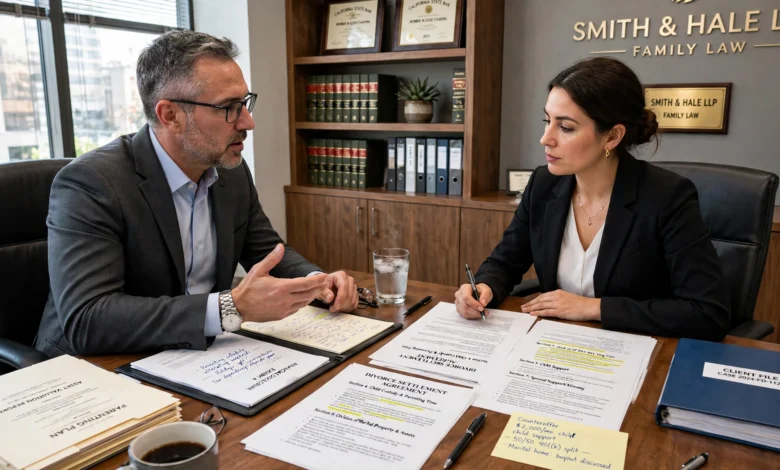
Challenging CSA assessments is something a lot of Melbourne parents think about but few actually do, usually because the process looks confusing or the deadlines have already slipped by. That is a shame, because the system was built with room for correction. The formula Services Australia uses is a blunt tool. It works from tax figures, care nights and a standard table of child costs, and it can easily land on a number that makes no sense for your family.
Maybe your income dropped after a redundancy and the assessment still uses last year’s return. Maybe the other parent earns far more than their taxable income shows. Maybe your child has medical costs the formula simply ignores. In each case, you have options, and they are free to use.
This guide walks through how child support assessments in Melbourne are calculated, where they tend to go wrong, and the practical steps for challenging them. You will learn the difference between an objection and a change of assessment, what the 10 special circumstances reasons cover, how the Administrative Review Tribunal fits in, and when it makes sense to bring in a family lawyer in Melbourne.
One quick note on names. The Child Support Agency (CSA) is now part of Services Australia and is officially called Services Australia Child Support. Most people still say CSA, so this article uses both. The rules are federal, so they apply the same way in Melbourne as anywhere else in Australia, but local help and court registries matter, and we cover those too.
How a CSA Child Support Assessment Is Worked Out
Before challenging CSA assessments, it helps to know what the number is built from. Services Australia Child Support uses a set formula under the Child Support (Assessment) Act 1989. It does not look at your budget or your rent. It looks at a handful of inputs and runs them through a fixed calculation.
The main inputs in the child support formula
- Adjusted taxable income for each parent, usually taken from the most recent tax assessment. This includes taxable income plus items like reportable fringe benefits, net investment losses and some tax-free pensions.
- A self-support amount, which is deducted from each parent’s income before the calculation starts.
- The care percentage, based on how many nights each parent has the child over a year.
- The number and ages of the children, since older children are treated as costing more.
- Other children each parent supports, which can reduce their child support income.
The formula combines both parents’ incomes, works out each parent’s share, applies a standard cost of children figure, and then offsets that against the care each parent provides. The result is the annual rate one parent pays to the other.
Why the formula gets it wrong
The child support formula is designed for the typical case. It assumes tax returns reflect real income, that care arrangements match what was reported, and that a child’s costs fit the standard table. When any of those assumptions break, the assessment drifts away from reality. That gap is exactly what the review system exists to close.
Common Grounds for Challenging CSA Assessments
Most disputes fall into a few familiar patterns. Knowing which one you are dealing with tells you which pathway to use, because an error of fact is handled differently from a case of special circumstances.
Wrong or outdated information
This is the most common problem. The assessment might use an old tax return, the wrong number of care nights, or an income figure from before a job loss. If a parent has not lodged a tax return, Child Support may apply a provisional or default income, which can be much higher than what they actually earn. These are factual errors, and an objection is usually the right tool.


Your income has dropped
If your income has fallen and you expect it to stay lower, you can lodge an income estimate rather than wait for next year’s tax return. Services Australia generally needs the estimate to be meaningfully lower than the income used in your assessment (the threshold is usually a 15% drop). Be careful here. If your actual income ends up higher than your estimate, you may be reconciled at the end of the year and face a debt.
The other parent’s income looks too low
This comes up a lot with self-employed parents, business owners and people paid through trusts or companies. Taxable income can be reduced through legitimate structuring, but that does not always reflect the money available to support a child. You cannot fix this with a simple objection. It usually needs a change of assessment under the special circumstances reasons, backed by solid evidence.
Care arrangements have changed
If the child now spends more or fewer nights with you than the assessment shows, the care percentage needs updating. Tell Services Australia promptly, because some changes cannot be backdated if you wait.
The formula ignores real costs
High school fees both parents agreed on, a child’s disability, big travel costs to see the children, or support you provide to another child are all examples where the formula can produce an unfair result. These fit the special circumstances reasons covered later in this guide.
7 Proven Steps for Challenging CSA Assessments in Melbourne
There is no single form called “challenge my assessment”. Instead, there are several routes, and the right one depends on what went wrong. Here is the order most Melbourne parents should work through.
Step 1: Read the decision letter and note the deadline
Every child support decision comes with a letter explaining your review rights. Find the date you received it and count forward. For most decisions you have 28 days to object, or 90 days if you live overseas in a reciprocating jurisdiction. Put that date in your calendar today. Late objections can be accepted, but you have to ask for an extension and explain the delay, and it is not guaranteed.
Step 2: Work out what kind of problem you have
Ask yourself one question: is the assessment wrong based on the facts and rules, or is it technically correct but unfair in your situation?
- Wrong facts or rules (wrong income, wrong care nights, wrong child) point to an update or an objection.
- Correct but unfair (hidden income, special needs, high costs) points to a change of assessment.
Getting this right saves months. Lodging an objection when you really need a change of assessment usually ends with the objection being refused.
Step 3: Fix simple errors directly
Some problems do not need a formal challenge at all. You can often fix them by updating your details through your Child Support online account in myGov:
- Report a change in care arrangements.
- Lodge an income estimate if your income has dropped.
- Lodge an overdue tax return so a default income is replaced with your real figure.
- Correct personal details, such as the children listed on the case.
Step 4: Lodge a child support objection
If you disagree with a decision Child Support has made, lodge a formal child support objection. You can do this online or with the Objecting to a child support decision form (CS1893). A different officer, who was not involved in the original decision, reviews it. According to Services Australia’s guide to objecting to child support decisions, they aim to decide within 60 days where both parents live in Australia.
Write your objection clearly. Say which decision you disagree with, why it is wrong, and what you think the correct outcome is. Attach evidence.
Step 5: Apply for a change of assessment
If your issue is special circumstances, lodge an Application to change your assessment (CS1970). It is free. You must show that at least one of the 10 reasons applies, that the change is fair to both parents and the child, and that it is just and equitable. The other parent gets a copy of your application and evidence and can reply using form CS1971. Child Support can backdate a change up to 18 months before the date you apply.
Step 6: Take it to the Administrative Review Tribunal
If you are unhappy with the objection decision, you can apply to the Administrative Review Tribunal (ART) within 28 days of receiving it. There is no fee for a first review of a child support decision. The ART replaced the old Administrative Appeals Tribunal in October 2024, so ignore older guides that tell you to go to the AAT.
Step 7: Get legal advice before going further
If the tribunal decision still looks wrong, your options narrow. Appeals on a question of law can go to the Federal Circuit and Family Court of Australia, and courts can also make orders departing from an assessment in some situations. This is the point where advice from a Melbourne family lawyer is worth the cost.
One rule applies at every step: keep paying the assessed amount while your challenge is underway. Lodging an objection or change of assessment does not pause your obligation, and arrears can be collected later.
The 10 Change of Assessment Reasons Explained
A change of assessment in special circumstances is the strongest tool for challenging CSA assessments that are correct on paper but unfair in practice. Services Australia is clear that simply being unhappy with your child support is not enough. You need to fit at least one of these 10 reasons and prove it with evidence.
- High costs of spending time with the child. For example, regular flights from Melbourne to Perth to see your kids.
- The child’s special needs. Ongoing medical, therapy or disability costs that go well beyond the normal cost of raising a child.
- High costs of caring for, educating or training the child in the way both parents intended. Private school fees are the classic example, but only where both parents planned for it.
- The child’s own income, property or financial resources. Such as a trust or significant savings in the child’s name.
- Payments the paying parent has made for the child. Money, goods or property transferred to the child, the carer or a third party for the child’s benefit.
- High child care costs for a child under 12.
- Your necessary expenses significantly affect your ability to support the child. Such as major medical costs of your own.
- The income, earning capacity, property or financial resources of either parent. This is the reason used most often against self-employed parents, parents who have reduced their work hours to lower their child support, or parents with large assets but low taxable income.
- You have a duty to support another child or person.
- The costs of supporting a resident child. For example, a child from a new relationship who has special needs.
What decision makers look for
A senior case officer will usually hold a conference with both parents, often by phone. They need to be satisfied that special circumstances exist, that one of the reasons is made out, and that changing the assessment would be just and equitable and otherwise proper. The Services Australia page on changing your assessment in special circumstances lists the evidence they expect for each reason.
Be aware that a change of assessment can cut both ways. Once you open the door, the case officer can look at everyone’s circumstances, and the other parent can make a cross application. The final figure may not move in the direction you hoped.
Taking Your Challenge to the Tribunal or Court
Most disputes end at the objection or change of assessment stage. When they do not, the next level of review is independent of Services Australia.
The Administrative Review Tribunal (ART)
The ART can review most child support objection decisions. You must have objected first, because the tribunal cannot look at a decision that has not been through Child Support’s own review. Key points:
- Time limit: 28 days from receiving the objection decision (90 days if you live overseas in a reciprocating jurisdiction).
- Cost: no application fee for a first review.
- Process: Child Support sends the relevant documents to the tribunal and both parents. Hearings are usually by phone or video, and they are less formal than court.
- Legal costs: you can represent yourself. If you hire a lawyer, you generally pay your own costs, even if you win.
You can apply online through the Administrative Review Tribunal website, which also explains which child support decisions it can review.
When the Federal Circuit and Family Court gets involved
Court is usually a last resort for challenging CSA assessments. The Federal Circuit and Family Court of Australia, which has its Melbourne registry at the Commonwealth Law Courts on William Street, can become involved when:
- you want to appeal an ART decision on a question of law,
- there are already family law proceedings on foot and a court is asked to make a departure order at the same time,
- there is a dispute about parentage, or
- there is a need to recover overpaid child support or enforce a debt.
Court brings real cost and risk, including possible costs orders. Get advice before filing anything.
Building Strong Evidence for Your Child Support Challenge
The parents who succeed at challenging CSA assessments are rarely the ones with the most emotional story. They are the ones with the best paperwork. Decision makers deal in documents, so give them documents.
Evidence that tends to carry weight
- Income records: tax returns, notices of assessment, payslips, Centrelink statements and bank statements.
- Business and trust records: financial statements, BAS lodgements, company and trust tax returns, and records of director loans or distributions.
- Lifestyle evidence: this matters when the other parent claims a low income. Property titles, car registrations, holiday spending and social media posts can show resources the tax return does not.
- Care evidence: a calendar of nights, school pick-up records, messages arranging handovers, and any parenting plan or court orders.
- Cost evidence: receipts, invoices, school fee statements, medical reports and specialist letters for the child.
Mistakes to avoid
- Missing the 28-day deadline. It is the most common reason a good challenge fails before it starts.
- Stopping payments. Child Support can collect arrears through tax refunds, wage deductions and departure prohibition orders.
- Using the wrong pathway. An objection cannot fix hidden income, and a change of assessment cannot fix a simple data error.
- Sending vague statements. “He earns more than he says” goes nowhere. “He bought a $90,000 car in March while declaring $40,000 income” gets attention.
- Forgetting the other parent sees everything. Your application and attachments are shared, so keep it factual and leave the personal attacks out.
- Lodging a low income estimate you cannot support. If your real income comes in higher, you can end up owing money at reconciliation.
Getting Help With Challenging CSA Assessments in Melbourne
You do not need a lawyer to lodge an objection or a change of assessment. Plenty of parents handle these themselves. Still, a second set of eyes helps, especially when business income, trusts or large sums are involved.
Free and low-cost options
- Victoria Legal Aid runs a child support legal service and can give free advice, help draft applications and sometimes represent parents at the tribunal. Their page on disagreeing with a child support decision is a good starting point.
- Community legal centres across Melbourne offer free family law advice sessions.
- Family Relationship Centres can help parents negotiate a private child support agreement, which sometimes avoids a dispute altogether.
- Services Australia Child Support itself can explain how your assessment was calculated if you call and ask.
When to hire a family lawyer in Melbourne
Paid advice makes sense when the other parent is self-employed or runs income through a company or trust, when the amounts at stake are large, when you are heading to the ART or court, or when child support is tied up with a property settlement or parenting dispute. Many Melbourne family lawyers offer a fixed-fee first consultation, which is often enough to tell you whether your case is worth pursuing.
Frequently Asked Questions
How long do I have to object to a CSA assessment?
Usually 28 days from receiving the decision letter, or 90 days if you live overseas in a reciprocating jurisdiction. Objections about care percentage can be lodged at any time, but late ones may not be backdated.
Can a change of assessment be backdated?
Yes. Child Support can backdate a change up to 18 months before the date you lodged the application.
Does challenging CSA assessments cost anything?
Objections, change of assessment applications and first reviews at the ART are all free. Your only cost is legal advice if you choose to get it.
Do I keep paying while my challenge is assessed?
Yes. The current assessment stays in force until it is changed, so keep paying to avoid a debt.
Conclusion
Challenging CSA assessments in Melbourne is far more achievable than most parents expect, as long as you move quickly and choose the right pathway. Start by reading your decision letter and noting the 28-day deadline, then work out whether you are dealing with a factual error, a drop in income, a change in care, or genuine special circumstances. Simple errors can often be fixed by updating your details, while wrong decisions call for a formal objection and unfair results call for a change of assessment under one of the 10 reasons.
If the outcome still looks wrong, the Administrative Review Tribunal offers a free independent review, with the Federal Circuit and Family Court as a last resort. Throughout the process, keep paying the assessed amount, back every claim with documents, and lean on Victoria Legal Aid or a Melbourne family lawyer when the money or the complexity justifies it. Handled well, a challenge can bring your child support back in line with your family’s real circumstances.