Melbourne Drink Driving Lawyers: Losing Your License Victoria
Facing a drink driving charge in Victoria? Melbourne drink driving lawyers explain licence loss, penalties, and how to protect your driving rights.
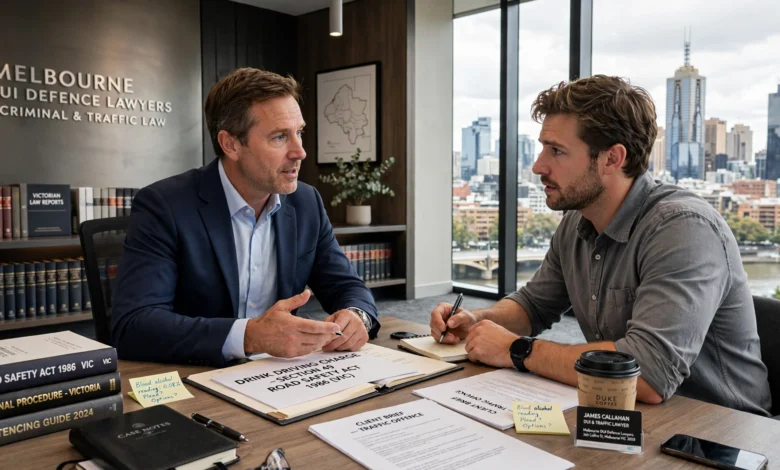
Getting pulled over and blowing over the limit is one of those moments that changes the rest of your week, and sometimes the rest of your year. If you’re reading this, chances are you or someone close to you is staring down a drink driving charge in Victoria and trying to work out what happens next. The short answer is: it depends on your reading, your record, and how the matter is handled in court.
Melbourne drink driving lawyers deal with this exact situation every single day, and the difference between walking out with a manageable outcome and walking out without a licence for a year often comes down to how the case is prepared and argued.
This article walks through what actually happens when you’re charged with drink driving in Victoria, how licence disqualification works, what penalties you’re realistically facing, and why getting proper legal advice early can change the outcome.
We’ll cover the different blood alcohol categories, the court process, interlock conditions, and the practical steps you should take the moment you’re charged. Whether this is your first offence or you’re worried about a repeat charge, understanding the system before you walk into court puts you in a much stronger position.
Understanding Drink Driving Laws in Victoria
Victoria treats drink driving as a serious road safety offence, and the penalties reflect that. Under the Road Safety Act 1986, driving with a blood alcohol concentration (BAC) above the legal limit is a criminal offence, not just a traffic infringement. For most fully licensed drivers, the legal limit is 0.05, while learner and probationary drivers must have a BAC of zero.
The law doesn’t just look at whether you were over the limit. It looks at how far over you were, whether you’ve offended before, and whether anyone was put at risk. This is why two people with the same BAC reading can walk away with very different outcomes.
The BAC Categories That Determine Your Penalty
Victoria Police and the courts classify drink driving offences into bands, and each band carries its own penalty range:
- Low range (0.05–0.069): Generally the least serious category, often resulting in a fine and a shorter licence disqualification.
- Mid range (0.07–0.099): Higher fines, longer disqualification periods, and the case is usually heard in the Magistrates’ Court.
- High range (0.10–0.149): Serious penalties including possible imprisonment, significant fines, and extended licence loss.
- Extremely high range (0.15 and above): The most severe category, carrying the longest disqualification periods and the highest likelihood of a custodial sentence for repeat offenders.
Where your reading falls in these bands has a direct effect on whether you’re dealing with an on-the-spot penalty or a court appearance, so it’s worth knowing exactly where you sit before assuming the worst (or the best).
How Licence Disqualification Actually Works
This is usually the part people care about most, and understandably so. Losing your licence affects your job, your family responsibilities, and your ability to get around a city that isn’t always kind to people without a car.


Automatic vs Court-Ordered Disqualification
For low-range first offences, Victoria Police can sometimes issue an infringement notice with an automatic short disqualification, without the matter going to court. For anything above low range, or for repeat offences, the matter goes before a Magistrate, who decides the length of disqualification based on the circumstances.
Minimum Disqualification Periods
While courts have discretion, there are minimum periods set out in legislation. Generally speaking:
- First low-range offence – disqualification periods can be as short as a few months, sometimes with an infringement notice option.
- First mid-range offence – typically six months or more.
- First high-range or extremely high-range offence – can extend well beyond twelve months.
- Second or subsequent offences – disqualification periods increase substantially, and courts take a much harder line.
It’s worth noting these are starting points, not guarantees. A Magistrate can extend or, in some circumstances, reduce a disqualification period depending on how the case is presented, your driving history, and any mitigating circumstances raised on your behalf.
The Alcohol Interlock Program
For many drink driving offences in Victoria, particularly mid-range and above, the court will order participation in the Alcohol Interlock Program once your disqualification period ends. This requires fitting a breathalyser device to your vehicle that prevents the engine from starting if alcohol is detected on your breath. The program can run for months or years depending on the offence category, and non-compliance can extend the condition further. It’s a significant ongoing cost and inconvenience, which is another reason why the initial court outcome matters so much.
Why the Court Process Matters More Than People Expect
A lot of people assume that once you’re charged, the outcome is fixed. In reality, the Magistrates’ Court has considerable discretion in how it deals with drink driving matters, and the way your case is presented can genuinely shift the result.
What Happens at Your First Court Date
Your first appearance is usually a mention hearing, where the charge is formally read and you enter a plea. If you plead guilty, which is common for straightforward drink driving matters, the court will move to sentencing, sometimes on the same day, sometimes at a later date if further material is needed.
Factors the Magistrate Considers
When deciding on penalties, a Magistrate typically weighs up:
- Your BAC reading and how far it exceeded the legal limit
- Your driving record and any prior offences
- Whether your driving posed a genuine risk to others
- Your personal circumstances, including employment and family responsibilities
- Any steps you’ve taken since the offence, such as completing a driver education program
- Character references and evidence of genuine remorse
This is where Melbourne drink driving lawyers earn their fee. A well-prepared plea in mitigation, backed by references and evidence of proactive steps, can genuinely reduce the disqualification period or fine compared to walking in unrepresented.
Common Penalties You Could Be Facing
Beyond licence loss, drink driving convictions in Victoria can carry a range of consequences:
- Fines, which scale up significantly with each BAC band and with repeat offences
- A criminal record, which can affect employment, travel, and professional licensing
- Possible imprisonment, particularly for high-range readings or repeat offenders
- Increased insurance premiums, often for years after the offence
- Interlock conditions, adding cost and inconvenience after your disqualification ends
- Community Correction Orders, which may include unpaid community work or supervision conditions
The combination of these penalties is why so many people search for losing your license Victoria advice the moment they’re charged. It’s rarely just about the fine.
Why Legal Representation Changes the Outcome
Some people assume that because drink driving charges are common, they’re simple to handle without a lawyer. In practice, this is one of the most common mistakes people make. Courts see hundreds of drink driving matters, and an unrepresented plea often looks identical to every other one the Magistrate hears that day. A properly prepared case looks different.
What a Drink Driving Lawyer Actually Does
- Reviews the evidence, including whether the breath test procedure was conducted correctly
- Advises on whether a special circumstances application or restricted licence might apply
- Prepares a plea in mitigation tailored to your specific circumstances
- Gathers character references and supporting documentation
- Negotiates with prosecution where appropriate
- Represents you in court so you’re not navigating an unfamiliar system alone
When a Restricted or Work Licence May Be Possible
In certain circumstances, particularly for people who genuinely need to drive for work or caring responsibilities, it may be possible to apply for a restricted licence after part of the disqualification period has been served. This isn’t automatic, and eligibility depends heavily on the offence category and your personal circumstances. An experienced lawyer can advise whether this is a realistic option in your case and prepare the application properly.
Steps to Take Immediately After Being Charged
If you’ve just been charged, here’s a practical checklist to work through:
- Read the charge sheet carefully and note the date of your first court appearance.
- Avoid discussing the details on social media or with anyone outside your legal team.
- Gather documentation relevant to your circumstances, such as employment letters or evidence of family responsibilities.
- Consider a driver education or behaviour change program before your court date, as courts often view this favourably.
- Contact a lawyer as early as possible, ideally before your first court date, so there’s time to prepare properly.
- Keep a record of your driving history, since a clean record can support a more favourable outcome.
Taking these steps early doesn’t guarantee a particular result, but it puts you in the strongest possible position when your matter is heard.
Frequently Asked Questions
Can I drive while my case is being heard?
In most cases, if you were issued with an immediate licence suspension at the time of the offence, you cannot drive until that period ends or your case is resolved. Always check the specific conditions on your suspension notice.
Will I automatically go to jail for a first offence?
Not usually. Imprisonment is more common for high-range readings, repeat offences, or cases involving aggravating factors like a collision. Most first-time low to mid-range offences result in fines and disqualification rather than jail time.
Does a drink driving conviction stay on my record permanently?
Yes, a conviction generally stays on your criminal record, though the practical impact varies depending on your industry and whether you need a working with children check or similar clearance.
Is it worth contesting a drink driving charge?
It depends entirely on the specifics of your case, including how the breath test was conducted and whether proper procedure was followed. A lawyer can review the evidence and advise whether contesting the charge is realistic or whether focusing on mitigation is the better strategy.
For further reading on current legislation, the Victorian Government’s Road Safety Act information provides the full legal framework, and the Magistrates’ Court of Victoria publishes guidance on court processes for traffic and drink driving matters.
Conclusion
Drink driving charges in Victoria carry real consequences, from fines and licence disqualification to a lasting criminal record, and the specific outcome depends heavily on your BAC reading, driving history, and how your case is presented in court.
Working with experienced Melbourne drink driving lawyers early in the process gives you the best chance of a fair and proportionate outcome, whether that means minimising your disqualification period, securing a restricted licence, or simply making sure the court sees the full picture of your circumstances. If you’re facing a charge, don’t wait until your court date to seek advice. The earlier you get proper legal guidance, the more options you’re likely to have