New York Workers Compensation Lawyers: 5 Essential Facts About Devastating Construction Injuries
New York workers compensation lawyers explain how construction injury claims work, what benefits cover, and when a third-party suit pays more.
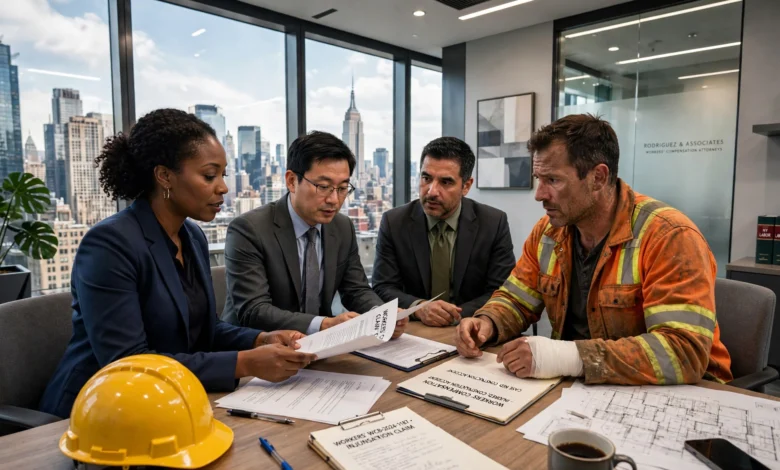
New York workers compensation lawyers see the same story on repeat: a worker falls from a ladder, gets struck by a falling beam, or throws out their back lifting material, and suddenly they’re staring down medical bills with no paycheck coming in. Construction is one of the most dangerous jobs in the state, and when something goes wrong, the legal process that follows is rarely as simple as filing a form and waiting for a check.
New York gives injured construction workers more protection than most states. Between the no-fault workers’ compensation system and separate laws like the Scaffold Law, there are usually two paths to recovery running at the same time, and most workers don’t know the second one exists until someone tells them. That gap in knowledge costs people real money.
This guide walks through how workers compensation actually works for construction injuries in New York, what benefits you can expect, where the system falls short, and when a construction injury lawyer can help you pursue compensation beyond the workers’ comp check. Whether you were hurt in a fall, hit by equipment, or injured from years of repetitive strain, understanding your options early makes a real difference in what you eventually recover.
Why Construction Injuries Are a Serious Problem in New York
Construction sites are unpredictable places, and New York’s building boom, especially across the five boroughs, means more workers on scaffolds, cranes, and scaffolds every year. Falls remain the single biggest cause of serious and fatal construction injuries in the state, followed by workers struck by falling objects or equipment.
Nationally, construction accidents accounted for over a thousand of the roughly 5,000 workplace deaths recorded in 2024, and New York has already seen at least one devastating construction accident in 2026. Even with safety rules tightening, the risk hasn’t gone away. Oversight has actually gotten thinner in some areas: the New York City Department of Buildings reported a staff vacancy rate above 12 percent as of early 2026, more than double the average across other city agencies, which limits how much proactive site inspection the department can realistically carry out.
Common causes of serious construction injuries include:
- Falls from heights — ladders, scaffolds, roofs, and unprotected floor openings
- Struck-by incidents — falling tools, materials, or debris
- Caught-in or caught-between accidents — trench collapses, equipment, and machinery
- Electrocution — exposed wiring or contact with power lines
- Overexertion injuries — repetitive lifting, carrying, or awkward postures that damage the back, shoulders, or joints
- Equipment failure — cranes, hoists, and power tools that malfunction or are poorly maintained
If you were hurt in any of these situations, the first thing to understand is that New York law actually gives you more than one route to compensation, and each one works differently.
How Workers Compensation Works for Construction Workers in New York
Workers compensation is a no-fault insurance system. That means you don’t need to prove your employer did anything wrong to get benefits, you just need to show you were injured on the job. In exchange, you generally can’t sue your direct employer for the injury, even if they were careless.
What Workers Compensation Covers
New York’s workers’ comp system, overseen by the New York State Workers’ Compensation Board, provides:

- Medical treatment — doctor visits, surgery, physical therapy, and prescriptions related to the injury
- Lost wage benefits — typically two-thirds of your average weekly wage, up to a state maximum, while you’re unable to work
- Permanent disability benefits — ongoing payments if you’re left with a lasting impairment
- Death benefits — support for surviving family members if a construction worker is killed on the job
Benefit minimums have also improved in recent years. Following legislation signed by Governor Kathy Hochul, the minimum weekly workers’ compensation benefit rose from $150 to $275 starting January 1, 2024, with a further increase to $325 in 2025, giving injured workers a slightly stronger financial floor while they recover.
What Workers Compensation Does Not Cover
This is where a lot of injured workers get caught off guard. Workers’ compensation does not pay for:
- Pain and suffering
- Emotional distress
- Full lost earning capacity, especially for long-term or career-ending injuries
- Loss of consortium (the impact on your relationship with a spouse or family)
Because these damages aren’t part of the workers’ comp formula, the payout often falls well short of what a seriously injured worker actually needs, especially if they can never return to physical labor. That’s the gap that a third-party construction injury claim is designed to fill.
Occupational Conditions Count Too
Not every construction injury happens in a single dramatic moment. Hearing loss from years of loud machinery, repetitive strain injuries, and lung conditions from dust or chemical exposure are all compensable under workers’ comp, but they come with tighter filing deadlines. Claims for an occupational disease generally must be filed within two years of when the disability started, or two years from when you realized the condition was connected to your job, whichever applies to your situation. Waiting too long to report symptoms is one of the most common reasons legitimate claims get denied.
Beyond Workers Comp: Third-Party Construction Injury Claims
Here’s the part most injured construction workers don’t find out about until they talk to a lawyer: while you generally can’t sue your own employer, you can often sue other parties responsible for a construction site, and that lawsuit isn’t capped the way workers’ comp benefits are.
Who Can Be Held Liable
Depending on how the accident happened, a construction injury lawyer may be able to pursue a claim against:
- The property owner
- The general contractor
- Subcontractors other than your own employer
- Equipment manufacturers, if defective machinery or tools caused the injury
- Architects or engineers, in cases involving design or planning failures
New York’s Key Construction Safety Laws
New York has three labor law provisions that come up constantly in construction injury cases, and they’re a major reason the state is considered more worker-friendly than most:
Labor Law 240, the Scaffold Law This law applies when a worker is injured in a fall from a height, or by an object falling from above, due to inadequate or missing safety equipment like scaffolding, ladders, hoists, or harnesses. Owners and contractors face strict liability under this law, meaning if the safety equipment was inadequate and that caused the fall, liability generally attaches regardless of how careful the worker was.
Labor Law 241(6) This covers a broader set of site safety violations tied to specific New York Industrial Code regulations, things like unsafe debris removal, poor lighting, or improper site conditions that don’t necessarily involve a fall.
Labor Law 200 This is New York’s codification of general negligence principles for construction sites, holding owners and contractors responsible when they had control over the work and failed to keep the site reasonably safe.
Together, these statutes mean that a New York construction injury lawyer often has several legal angles to work with, not just one. A single accident, say, a scaffold collapse, might trigger claims under all three laws simultaneously.
Notice and Filing Deadlines Matter
Third-party claims come with strict timelines, and missing one can end a case before it starts:
- Private third-party lawsuits generally must be filed within three years of the accident under New York’s civil procedure rules.
- If a government agency owns the site or property involved, you typically must file a Notice of Claim within 90 days of the accident, a much tighter window that catches a lot of people off guard.
- Workers’ compensation claims themselves should be reported to your employer within 30 days, and formally filed with the Workers’ Compensation Board within two years of the injury.
Because these deadlines don’t align with each other, it’s worth talking to a lawyer soon after an injury rather than waiting to see how recovery goes. Even if you’re not sure you want to pursue a lawsuit yet, preserving your options matters more than making a final decision right away.
What Compensation Can Look Like in a Construction Injury Case
The value of a claim depends heavily on which path you’re pursuing. Workers’ compensation follows a fixed formula. A third-party lawsuit does not, and that’s where the larger recoveries tend to come from.
Workers Compensation Benefits
- Medical expenses directly tied to the injury
- Roughly two-thirds of average weekly wage during disability, subject to state caps
- Scheduled loss of use awards for permanent injuries to specific body parts
- Vocational rehabilitation if you can’t return to your prior job
Third-Party Lawsuit Damages
- Full lost wages and diminished future earning capacity
- Pain and suffering, both past and future
- Cost of long-term or lifetime medical care
- Loss of consortium for a spouse or family
- Punitive damages in rare cases involving reckless conduct
Serious falls and struck-by accidents are where the largest verdicts and settlements tend to show up, since these injuries often involve permanent disability, spinal damage, traumatic brain injury, or amputation. Multi-million dollar outcomes aren’t unusual in cases involving high falls or crane failures, precisely because workers’ comp alone would never come close to covering the real cost of that kind of injury.
How a New York Workers Compensation Lawyer Helps Your Case
Filing a workers’ comp claim sounds straightforward on paper, but insurance carriers dispute, delay, and underpay claims constantly. A construction accident lawyer typically helps by:
- Filing the claim correctly and on time, avoiding technical errors that lead to denials
- Gathering evidence — accident reports, site photos, witness statements, and safety violation records
- Coordinating medical documentation so your treatment supports the full extent of your injury
- Identifying every liable party, not just your direct employer, so you don’t leave a viable third-party claim on the table
- Negotiating with insurance adjusters, who are trained to minimize payouts
- Handling appeals if your workers’ comp claim is denied or benefits are cut off early
- Pursuing litigation if a fair settlement isn’t offered
Most construction injury lawyers in New York work on contingency, meaning you pay nothing upfront and the firm only gets paid if you recover compensation. That arrangement matters a lot when you’re already dealing with lost income and mounting medical bills.
Questions to Ask Before Hiring a Lawyer
- Have you handled cases specifically involving Labor Law 240 and 241(6)?
- Do you handle both the workers’ compensation claim and any third-party lawsuit, or only one?
- What’s your experience with cases involving my type of injury?
- How do you communicate case updates, and how often?
- What are your fees, and are there any costs I’d owe regardless of outcome?
A lawyer who only handles one side of the case, workers’ comp or third-party litigation but not both, may miss opportunities the other track could offer. Many injured workers do best with a firm that coordinates both claims together.
Common Mistakes That Hurt a Construction Injury Claim
A few avoidable missteps show up again and again in denied or undervalued claims:
- Not reporting the injury quickly. Waiting days or weeks to tell a supervisor gives insurers a reason to question whether the injury actually happened at work.
- Skipping medical treatment. Gaps in care make it easier for an insurance carrier to argue the injury wasn’t serious, or wasn’t related to work at all.
- Giving a recorded statement to an insurance adjuster without legal advice. These statements are often used later to minimize or deny a claim.
- Returning to work too soon. Going back before a doctor clears you can worsen the injury and undercut your own claim.
- Missing filing deadlines, especially the 90-day notice requirement for claims against government-owned property.
- Not documenting the scene. Photos of the site, equipment, and safety conditions right after an accident can be critical evidence later.
Avoiding these mistakes early on preserves both your workers’ comp benefits and any third-party claim you may be entitled to pursue later.
Frequently Asked Questions
Can I get workers compensation and also sue someone for my construction injury? Yes, in many cases. Workers’ compensation and a third-party lawsuit against a negligent property owner, general contractor, or equipment manufacturer can proceed at the same time, since they’re separate legal claims covering different types of damages.
What if my employer says the accident was my fault? New York workers’ compensation is a no-fault system, so your own carelessness generally doesn’t disqualify you from benefits, with limited exceptions like intoxication or intentional self-injury.
How long do I have to report a construction injury? Report the injury to your employer as soon as possible, ideally within 30 days, and file the formal claim with the Workers’ Compensation Board within two years.
Do I need a lawyer for a straightforward workers’ comp claim? Even claims that seem simple can run into disputes over the extent of injury, average wage calculations, or return-to-work timing. A lawyer isn’t always required, but having one usually results in a stronger, better-documented claim.
What if the construction site was owned by a city or state agency? You’ll likely need to file a Notice of Claim within 90 days of the accident, a much shorter deadline than the standard three-year window for private claims, so speak with a lawyer quickly in these situations.
For workers wanting to review official safety data, the OSHA construction industry resources offer statistics on the most common violations and injury causes nationwide, which can add useful context to a claim involving site safety failures.
Conclusion
Construction work carries real risk, and when an injury happens, the legal path forward in New York is more layered than most workers expect. Workers’ compensation provides a no-fault safety net covering medical care and partial wages, but it stops well short of covering pain, suffering, or the full financial hit of a serious or permanent injury. That’s why understanding third-party claims under laws like the Scaffold Law matters just as much as filing the initial workers’ comp claim.
Between strict deadlines, disputes with insurance carriers, and the question of who else might be liable, working with an experienced New York workers compensation lawyer early on gives injured construction workers the best shot at recovering what the injury actually cost them, not just what a standard formula allows.