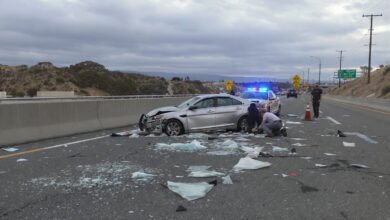
Sydney Car Accident Lawyers: Hit-and-Run Case Specialists
Sydney car accident lawyers specialising in hit-and-run cases can help you claim compensation through the NSW Nominal Defendant scheme — even if the driver fled.

Sydney car accident lawyers who specialise in hit-and-run cases deal with one of the most frustrating legal situations a person can face: you’ve been injured, your life has been turned upside down, and the person responsible is gone. No name. No plate number. No insurance details. Just pain, medical bills, and a lot of unanswered questions.
Here’s what most people don’t realise — being the victim of a hit-and-run accident in NSW does not mean you’re left without options. The law actually has a built-in safety net for exactly this situation. Through the NSW Nominal Defendant scheme, injured victims can access the same compensation they would have received if the at-fault driver had stayed at the scene.
But here’s the catch: the process is time-sensitive, document-heavy, and actively scrutinised by insurers. Missing a deadline by even a few days can cost you your entire claim. Submitting incomplete evidence can result in rejection. And because there’s no identified driver to hold liable, the burden of proof lands squarely on you.
That’s why working with experienced Sydney car accident lawyers who have handled hit-and-run cases before isn’t just helpful — it’s arguably essential. This article walks you through everything you need to know: the law, the process, the deadlines, the compensation you can expect, and how to choose the right legal team to fight your corner.
What Qualifies as a Hit-and-Run Accident in NSW?
A hit-and-run accident occurs when a motor vehicle strikes another vehicle, a pedestrian, a cyclist, or any person on the road — and the driver leaves the scene without stopping to provide their details or render assistance. Under the NSW Road Rules, every driver involved in a crash is legally required to stop, check for injuries, and exchange personal and registration information with affected parties. Failing to do so is a criminal offence.
Common hit-and-run scenarios that Sydney car accident lawyers regularly handle include:
- A pedestrian struck by a car that speeds off without stopping
- A cyclist sideswiped by a passing vehicle that never slows down
- A stationary vehicle hit while parked, with the at-fault driver disappearing
- A driver T-boned at an intersection by a vehicle that runs a red light and flees
- A motorcycle rider knocked off by a car door that opens into traffic, with the other driver driving away
What all of these situations share is the absence of an identified at-fault party — and that’s precisely what makes them legally complex. From a personal injury perspective, a hit-and-run accident occurs when a driver collides with a person and fails to stop to provide their details or render assistance. The good news is that NSW law has evolved specifically to address this gap.
The NSW Nominal Defendant: Your Legal Safety Net After a Hit-and-Run
If you’ve been injured in a hit-and-run accident in Sydney, the single most important legal concept you need to understand is the Nominal Defendant. This is the mechanism that makes compensation possible even when the at-fault driver cannot be found.
In NSW, the Motor Accident Injuries Act 2017 created a safety net for people injured by uninsured or unidentifiable vehicles. The Nominal Defendant is a statutory body within the NSW CTP (Compulsory Third Party) insurance scheme. It steps into the shoes of the at-fault party’s insurer when the vehicle involved in the accident is uninsured, or when the vehicle and/or driver responsible for the accident cannot be identified.


In practical terms, the Nominal Defendant acts exactly like any other CTP insurer. It reviews your claim, assesses your injuries, pays out statutory benefits, and — if your injuries are serious enough — can be held liable for common law damages as well.
Who Can Make a Nominal Defendant Claim?
In NSW, the following people can usually make a Nominal Defendant claim: drivers or passengers, pedestrians, cyclists, or motorcyclists, parents of children injured in a road accident, witnesses to a fatal crash who develop a psychological condition as a result, and people who have lost a loved one in a motor vehicle accident.
This is a broad group. Whether you were driving, riding, walking, or cycling, if a hit-and-run vehicle was involved in your injury, you likely have a pathway to compensation.
The “Due Enquiry and Search” Requirement
One obligation that catches many claimants off guard is the due enquiry and search requirement. Before you can claim through the Nominal Defendant on the basis of an unidentified vehicle, you must demonstrate that you made genuine efforts to track down the at-fault driver and failed.
Before an injured person can make a claim against the Nominal Defendant, they must do all they can to find out the registration number of the vehicle at fault. This will include contacting police, seeking out witnesses, and putting a notice in the media. This is called due enquiry.
A Sydney car accident lawyer experienced in hit-and-run cases will help you document this process thoroughly, which is critical because the Nominal Defendant will scrutinise whether you genuinely tried to identify the vehicle before defaulting to a claim against them.
Time Limits That Could Make or Break Your Hit-and-Run Claim
One of the biggest differences between hit-and-run compensation claims and regular CTP claims is the much tighter time limits. This is where many unrepresented claimants lose their rights entirely. An experienced Sydney car accident lawyer will know these deadlines cold and make sure you never miss them.
The Key Deadlines in NSW
Here’s a clear breakdown of the time limits that apply to Nominal Defendant claims in NSW:
- 28 days — You must report the accident to police within 28 days. This is a hard requirement, and failure to report within this window needs to be explained in full to avoid your claim being rejected.
- 28 days — Lodge your Application for Personal Injury Benefits within 28 days of the accident to receive a back-payment of weekly payments to the accident date.
- 3 months — You can still lodge a claim form up to 3 months after the accident, but you will lose the back-payment entitlement unless you have a full and satisfactory explanation for the delay.
- 6 months — After notifying the Nominal Defendant, you have up to six months from the date of the accident to lodge your formal claim, including all required medical evidence and documentation.
- 3 years — For serious injuries, an application for a common law damages claim (lump sum) may be possible up to three years from the date of the accident, subject to meeting the injury threshold.
These timeframes are significantly shorter than the standard three-year limitation period for other personal injury claims, making early action essential in hit-and-run cases.
The message is simple: do not wait. The moment you’re involved in a hit-and-run accident in Sydney, start the legal clock running in your favour by contacting both the police and a qualified motor vehicle accident lawyer as soon as physically possible.
What Compensation Can Hit-and-Run Victims Claim in NSW?
This is the question most clients ask first — and for good reason. Understanding what you’re entitled to shapes every decision you make about whether and how hard to fight your case.
Statutory Benefits (Available to All Injured Claimants)
If you’ve been injured in a motor vehicle accident in NSW and the other driver is unknown or untraceable, you may be eligible for statutory benefits: weekly income support, medical expenses, and care services.
These statutory benefits are available regardless of fault, meaning even if you contributed to the accident in some way, you can still access initial support. They include:
- Weekly income support to replace lost earnings while you recover
- Medical and treatment expenses including hospital fees, surgeries, rehabilitation, physiotherapy, and psychology
- Domestic care assistance if your injuries prevent you from managing household tasks
- Travel expenses for getting to and from medical appointments
Lump Sum Compensation (For Serious Injuries)
Beyond statutory benefits, victims with more serious injuries can pursue lump sum common law damages. These are reserved for cases where your injuries cross what’s known as the statutory “threshold” — meaning they are assessed as more than minor.
Lump sum claims can cover:
- Non-economic loss (pain and suffering) — As of 1 October 2025 in NSW, the maximum amount you can receive for pain and suffering is currently $691,000. This amount is reserved for the most extreme cases, such as catastrophic brain or spinal cord injuries.
- Past and future loss of income — potentially hundreds of thousands of dollars for younger workers or high earners
- Future medical and care costs
- Loss of enjoyment of life
One telling statistic drives home the value of legal representation: in 2010, the average settlement amount for persons injured in a car accident who were not legally represented was about $11,000. In the same period, the average settlement amount of those who were legally represented was about $90,000 on average. The gap is enormous, and it almost certainly hasn’t narrowed since then.
Psychological Injuries Are Covered Too
Many hit-and-run victims suffer significant psychological trauma — PTSD, anxiety, depression, phobia of driving or walking near traffic. Claims for mental health issues may be considered alongside physical injuries, provided they stem directly from the incident and are backed by medical evidence.
A good Sydney car accident lawyer will ensure your psychological injuries are documented and included in your claim from the beginning, not added as an afterthought months down the track.
Steps to Take Immediately After a Hit-and-Run Accident in Sydney
The actions you take in the hours and days following a hit-and-run are directly proportional to the strength of your eventual compensation claim. Here’s a practical checklist every victim should follow.
Step 1: Call Emergency Services
If you or anyone else is injured, call 000 immediately. Your health comes first. Don’t attempt to chase the vehicle. Get an ambulance on the way and ensure the scene is safe.
Step 2: Report to Police Without Delay
This is non-negotiable. If the other driver did not give you their details, you should make a note of the other car’s registration plates and report the accident to the police within 24 hours. For a hit-and-run claim against the Nominal Defendant, you must report to police within 28 days, but the sooner the better — police are more likely to investigate actively when the report is fresh.
When you report, you’ll receive an Event Number beginning with the letter E. Keep this number — you’ll need it for your insurance and legal claim.
Step 3: Gather Every Piece of Evidence You Can
Before leaving the scene (if you’re physically able to), document everything:
- Photos of the accident location, road markings, skid marks, debris
- Photos of your vehicle, injuries, and property damage
- Names and contact details of any witnesses
- Any partial description of the at-fault vehicle — colour, make, partial plate, direction of travel
- CCTV camera locations in the area (businesses, traffic cameras, dashcams)
Step 4: Seek Medical Attention Immediately
Even if you feel fine, see a doctor the same day. Some injuries — whiplash, internal bleeding, traumatic brain injury — don’t produce obvious symptoms right away. A gap between the accident and your first medical visit is something insurers will use against you.
Your doctor will need to complete a CTP medical certificate, and every injury must be recorded. If it’s not in the certificate, it may not be covered in your claim.
Step 5: Contact a Sydney Car Accident Lawyer Specialising in Hit-and-Run Cases
Do this before you speak to any insurer. Dealing with insurance claims after an accident can be challenging. Some insurance companies may attempt to minimise your payout, offering far less than you deserve. A lawyer can help you navigate the claims process, ensuring that you fight for the compensation you’re entitled to.
Why Hit-and-Run Claims Are Harder Than Standard CTP Claims
Many people assume that because the Nominal Defendant scheme exists, making a hit-and-run claim is straightforward. It isn’t. These cases carry a higher evidentiary burden than standard motor accident claims, and Sydney car accident lawyers who specialise in this area understand exactly why.
Higher Scrutiny From the Nominal Defendant
Unfortunately, some fraudulent claims are made through the Nominal Defendant scheme. As a result, legitimate claimants may face more scrutiny and scepticism about their accounts. You’ll need to work harder to prove your version of events, and any inconsistency in your account will be exploited.
No Identified Defendant to Corroborate Events
In a standard car accident, both drivers can be interviewed, their accounts compared, and the truth established. In a hit-and-run, you are the primary source of what happened. If there are no witnesses, no CCTV footage, and limited physical evidence at the scene, your case rests almost entirely on your credibility and the quality of your documentation.
Proving the Vehicle Was Involved
The complication of a hit-and-run accident lies in the evidence. Hit-and-run accidents are substantially harder to prove, particularly if there were no witnesses or the injured party has no memory of the accident. A person who has been injured as a result of a hit-and-run accident will need to prove that their injuries are indeed the result of a hit-and-run accident.
A specialist Sydney car accident lawyer will commission accident reconstruction experts, subpoena nearby CCTV footage, track down witnesses, and build the kind of evidentiary record that satisfies even a sceptical Nominal Defendant.
How Sydney Car Accident Lawyers Handle Hit-and-Run Cases
Understanding what your lawyer actually does day-to-day in a hit-and-run case helps you choose the right firm and understand the value they bring.
Initial Case Assessment
A reputable Sydney car accident lawyer will conduct a free, no-obligation case assessment. They’ll review your circumstances, assess your injuries, check whether your deadlines are still intact, and give you an honest view of your prospects and potential compensation range.
Evidence Collection and Preservation
Time-sensitive evidence like CCTV footage gets overwritten quickly — often within 24 to 72 hours. Your lawyer will move fast to:
- Issue letters to businesses, traffic authorities, and councils to preserve CCTV footage
- Track down and take statements from witnesses
- Commission an independent accident reconstruction report
- Obtain the police event report and any investigation findings
- Compile your full medical history and treatment records
Lodging the Claim Correctly
Such claim forms can be detailed and complex and it is important they are filled out correctly. An experienced compensation lawyer can assist you to fill out relevant forms and lodge them. A single error in the claim form — an incorrect date, a missing injury, an incomplete description of the accident — can trigger a review, a delay, or an outright rejection.
Negotiating With the Nominal Defendant
Once the claim is lodged and your injuries have stabilised (usually after 12 months), your lawyer will negotiate your settlement with the Nominal Defendant’s appointed insurer. They’ll use your medical assessments, expert reports, employment records, and financial documentation to push for the maximum payout your injuries support.
Going to Court if Necessary
If the Nominal Defendant disputes liability, undervalues your injuries, or refuses to settle fairly, an experienced Sydney car accident lawyer will take the matter to the NSW Personal Injury Commission or the courts. This is exactly where specialist knowledge pays off — knowing the precise legal thresholds, the relevant case law, and the procedural rules can be the difference between winning and losing.
Choosing the Right Sydney Car Accident Lawyer for Your Hit-and-Run Case
Not every personal injury firm is equipped to handle the specific complexities of hit-and-run and Nominal Defendant claims. Here’s what to look for when choosing who to represent you.
Accredited Specialists in Personal Injury Law
The Law Society of NSW offers an Accredited Specialist designation in personal injury law. This is not just a marketing label — it requires demonstrated expertise and regular re-assessment. You should only use a lawyer who is a Specialist in Personal Injury law as accredited by the Law Society of NSW.
Specific Experience With Nominal Defendant Claims
Ask directly: “How many Nominal Defendant claims have you handled?” and “What’s your track record with unidentified driver cases?” Firms that handle a broad range of personal injury work may not have the depth of experience that a specialist motor accident firm brings to these cases.
No Win, No Fee Arrangements
Access to justice shouldn’t depend on your financial position. Every reputable Sydney car accident lawyer handling motor accident claims should offer a No Win, No Fee arrangement. This means your legal fees are only payable if your claim is successful. If you appoint a lawyer, between 50–70% of the legal costs are also payable by the CTP Insurer. This means you receive expert representation at minimal personal financial risk.
Clear Communication and Genuine Care
Beyond credentials, choose a lawyer who takes the time to explain the process in plain English, keeps you updated without being chased, and treats your case as more than a file number. Hit-and-run claims can take 12 to 24 months to fully resolve — you need someone you can trust for the long haul.
Common Mistakes Hit-and-Run Victims Make That Hurt Their Claims
Knowing what not to do is just as important as knowing the right steps. Sydney car accident lawyers see these mistakes repeatedly, and every one of them is avoidable with the right guidance.
- Waiting too long to report to police. Every day you delay weakens your claim and risks missing the 28-day reporting window.
- Not seeking medical attention immediately. A gap in medical treatment reads to insurers as evidence your injuries weren’t serious.
- Failing to document the scene. Even if you’re shaken, try to take photos or ask a bystander to do it for you.
- Speaking to insurers without legal advice. Insurers are skilled at obtaining statements that minimise their liability. Say as little as possible until you have a lawyer.
- Assuming you have no claim because the driver fled. This is the most costly misconception. The Nominal Defendant scheme exists precisely for this situation.
- Missing the 6-month formal claim deadline. Extensions are possible but not guaranteed. Don’t rely on them.
- Underreporting injuries. List every symptom — physical and psychological — from day one. Injuries that weren’t in your initial claim can be difficult to add later.
Key Laws Governing Hit-and-Run Compensation in NSW
For those who want to understand the legal framework underpinning their rights, here are the primary pieces of legislation that Sydney car accident lawyers work with in these cases:
- Motor Accident Injuries Act 2017 (NSW) — The foundation of the current CTP scheme, establishing the statutory benefits framework and the Nominal Defendant’s obligations.
- Motor Accident Injuries Regulation 2017 (NSW) — Supporting regulation setting out procedural requirements for claims.
- Motor Accidents Injuries (Indexation) Order (No 2) 2025 — Sets the current indexed cap on non-economic loss at $691,000 for the most severe cases.
- NSW Road Rules — Establishes the legal obligation of drivers to stop and exchange details after an accident.
For an authoritative overview of your rights under the NSW CTP scheme, the State Insurance Regulatory Authority (SIRA) is the primary government resource. For independent legal information, Legal Aid NSW provides accessible guides to the car accident claims process that can help you understand the basics before your first legal consultation.
Real-World Outcomes — What Can You Expect?
While every case is different, understanding the realistic range of outcomes helps you go into the process with calibrated expectations.
Minor injuries (whiplash, soft tissue strains, minor lacerations): Statutory benefits covering medical treatment and weekly income support for up to 26 weeks. Lump sum compensation is unlikely unless the injuries are assessed above the threshold.
Moderate injuries (fractures, nerve damage, moderate psychological conditions): Statutory benefits for an extended period plus potential eligibility for a common law damages claim. Settlements in the range of $100,000 to $400,000 are possible depending on the impact on your life and work.
Serious and catastrophic injuries (spinal cord injuries, traumatic brain injury, permanent disability): Full statutory benefits for up to 5 years or beyond, plus significant common law damages. Settlements can exceed $1 million in cases involving young people with lifelong earning capacity loss and ongoing care needs.
The key variable in all of this is the quality of your legal representation. As noted earlier, the gap between represented and unrepresented settlement outcomes has historically been around eight to one — a statistic that should give anyone pause before trying to navigate a hit-and-run compensation claim alone.
Sydney Car Accident Lawyers — FAQs About Hit-and-Run Cases
Can I still claim if I only have a partial description of the car?
Yes. If an injured person is unable to find out the registration number of the offending vehicle, the vehicle is deemed unidentified and a claim against the Nominal Defendant can be made. Your lawyer will help document your due enquiry efforts even with limited information.
What if the hit-and-run driver is later identified?
If police identify the driver after you’ve lodged a Nominal Defendant claim, the claim transitions to the identified driver’s CTP insurer. This actually works in your favour — you don’t lose your claim, you just get a clearer liable party to claim against.
Can I claim if the accident happened on private property?
This is where things get tricky. Claims are restricted to accidents on a road or ‘road-related area’. This includes footpaths, nature strips, public car parks, and any area open to the public for driving, riding, parking, or use by cyclists and animals. The Nominal Defendant is generally not liable if the accident happened on private property, as shown in recent 2024 and 2025 rulings like Wright v NRMA.
Is there any cost to consult a Sydney car accident lawyer?
No reputable firm will charge you for an initial consultation. All established motor vehicle accident lawyers in Sydney offer free case assessments with no obligation to proceed.
What if I was partially at fault for the hit-and-run?
You can still claim statutory benefits regardless of your level of fault. For common law lump sum damages, your compensation will be reduced proportionally to your share of fault — but it won’t necessarily be eliminated.
Conclusion
Sydney car accident lawyers who specialise in hit-and-run cases provide an irreplaceable service to some of the most vulnerable road accident victims in NSW. Being struck by an unidentified driver and left to deal with the consequences alone is both traumatic and legally complex — but the NSW Nominal Defendant scheme ensures that a pathway to hit-and-run compensation exists, provided you act quickly, document everything, report to police without delay, and engage a qualified motor vehicle accident lawyer who knows the system inside out.
From understanding the 28-day reporting window to navigating the 6-month formal claim deadline, from proving due enquiry to negotiating maximum lump sum damages, the difference between a specialist Sydney car accident lawyer and going it alone is often the difference between full compensation and nothing at all. If you’ve been injured in a hit-and-run accident in Sydney, the single most important step you can take right now is to pick up the phone and get a free case assessment — because the clock is already running.