Texas Civil Rights Attorneys: First Amendment Defense
Texas civil rights attorneys explain First Amendment defense options, free speech protections, and how to fight government overreach in Texas.
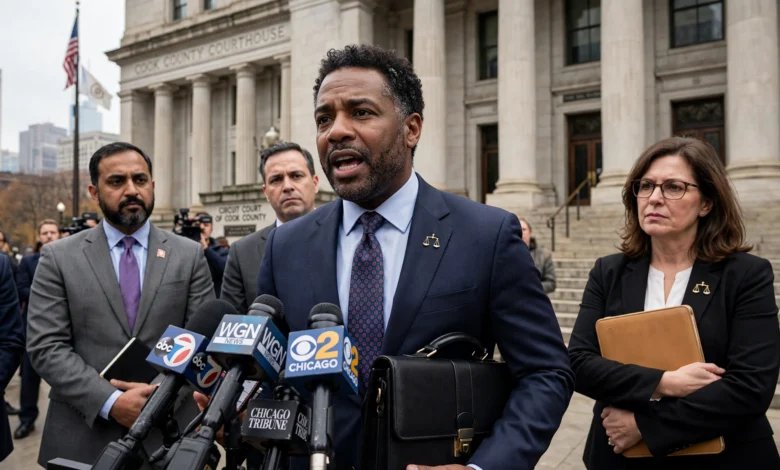
Texas civil rights attorneys handle some of the most consequential legal battles in the state, cases that decide whether people can speak, protest, worship, and publish without government interference. The First Amendment protects these freedoms on paper, but enforcing them in a courtroom is a different story. Texas has its own mix of state statutes, local ordinances, and court precedents that shape how free speech claims actually play out, and that’s why hiring an attorney who understands both federal constitutional law and Texas-specific procedure matters so much.
Whether you’re a protester who was arrested at a demonstration, a journalist facing a subpoena, a public employee disciplined for speaking out, or a business owner whose signage was restricted by a city ordinance, a First Amendment defense requires more than general legal knowledge. It requires someone who has actually litigated these claims against Texas municipalities, school districts, and state agencies.
This article breaks down what Texas civil rights attorneys do, the types of First Amendment cases they handle, how the legal process works, and what to look for when choosing representation. We’ll also cover related civil rights protections, common defenses used against government entities, and practical steps to take if your rights have been violated. By the end, you’ll have a clear picture of how First Amendment litigation works in Texas and how to find the right advocate for your case.
What Do Texas Civil Rights Attorneys Actually Do?
Texas civil rights attorneys represent individuals and organizations whose constitutional rights have been violated by government actors. This isn’t limited to free speech. Civil rights law covers a wide range of protections under the U.S. Constitution and federal statutes like 42 U.S.C. § 1983, which allows people to sue state and local officials for violating their constitutional rights.
A civil rights attorney’s work typically includes:
- Evaluating whether a government action (an arrest, a policy, a termination) violated a constitutional right
- Filing lawsuits against cities, counties, school districts, or state agencies
- Defending clients who are being prosecuted or sanctioned for protected speech
- Negotiating settlements with government entities
- Pursuing injunctions to stop ongoing constitutional violations
- Advocating for policy changes at the legislative or administrative level
Because these cases involve suing the government, they come with unique procedural hurdles. Governments and their employees often claim qualified immunity, a legal doctrine that shields officials from personal liability unless they violated a “clearly established” right. Navigating this defense is one of the main reasons people hire specialized attorneys instead of general practice lawyers.
Understanding First Amendment Defense in Texas
The First Amendment protects five core freedoms: speech, religion, press, assembly, and the right to petition the government. In Texas, these protections intersect with a state legal culture that leans heavily on local ordinances, open-carry and protest regulations, and a court system that has produced its own body of case law on public forums and expressive conduct.
Free Speech Protections
Free speech cases in Texas often involve:
- Protesters arrested during demonstrations
- Individuals cited for expressive conduct in public spaces
- Social media posts used as grounds for termination or discipline
- Restrictions on signage, flyers, or public displays
- Speech-based retaliation by public employers
Texas courts generally follow the federal “public forum” framework, which asks whether the location where the speech occurred is a traditional public forum (like a sidewalk or park), a designated public forum (like a public meeting), or a nonpublic forum (like a government office). The level of protection your speech receives often depends on where you were standing when you exercised it.

Freedom of the Press
Journalists and independent media in Texas have faced subpoenas, source-disclosure demands, and, in some cases, arrest while covering public events. A First Amendment defense attorney representing press clients typically focuses on shield law protections, prior restraint doctrine, and the right to record public officials performing their duties in public.
Freedom of Assembly and Protest Rights
Texas has seen a steady stream of litigation tied to protest rights, particularly around permitting requirements, curfews, and dispersal orders. Attorneys in this space frequently argue that a content-neutral time, place, and manner restriction was actually applied in a discriminatory or overly broad way, which can strip it of its legal justification.
Freedom of Religion
Religious liberty claims in Texas cover both the Free Exercise Clause and the Establishment Clause. Cases range from zoning disputes involving churches to disputes over religious expression in schools and workplaces. Texas also has its own Religious Freedom Restoration Act, which sometimes offers broader protection than the federal standard.
Common Types of First Amendment Cases Handled by Texas Attorneys
1. Wrongful Arrest for Protected Speech or Protest
When police arrest someone for peacefully protesting, filming officers, or holding a sign, that arrest can itself become the basis of a civil rights lawsuit. Attorneys look at whether officers had probable cause independent of the protected activity, or whether the arrest was retaliatory.
2. Public Employee Speech Retaliation
Government employees, including teachers, police officers, and city staff, don’t lose all their speech rights just because they work for the government. Courts apply the Pickering balancing test, weighing the employee’s interest in speaking on matters of public concern against the government’s interest in efficient operations. Texas attorneys handling these cases often need to show the speech touched on a matter of public concern rather than a purely internal workplace grievance.
3. School and Student Speech Cases
Public school students retain First Amendment rights, though schools can regulate speech that substantially disrupts the educational environment. Texas has seen litigation over dress codes, walkouts, social media posts, and student publications.
4. Government Censorship of Social Media and Online Speech
As more public communication moves online, disputes have emerged over public officials blocking constituents on social media, government content moderation policies, and platform-related speech restrictions. These cases raise novel questions about what counts as a “public forum” in the digital age.
5. Retaliation Against Whistleblowers and Public Critics
Public employees or contractors who speak out about waste, fraud, or misconduct sometimes face retaliation. Civil rights attorneys evaluate whether adverse action (termination, demotion, harassment) followed protected speech closely enough in time and circumstance to suggest a causal link.
How Texas Civil Rights Attorneys Build a First Amendment Case
Building a strong First Amendment defense requires a methodical approach. Here’s a general outline of how attorneys typically approach these cases:
- Case evaluation — Reviewing the facts to determine whether protected speech or conduct was involved and identifying the government actor responsible.
- Evidence gathering — Collecting body camera footage, witness statements, official policies, internal communications, and any documentation of the alleged violation.
- Pre-suit notice — In some cases, especially those involving government entities, formal notice requirements must be satisfied before filing suit.
- Filing the claim — Drafting and filing a complaint in state or federal court, often under Section 1983 for constitutional violations.
- Discovery — Exchanging evidence with the opposing party, including depositions of officials and records requests.
- Motion practice — Arguing against qualified immunity defenses and dispositive motions filed by government defendants.
- Trial or settlement — Resolving the case either through negotiated settlement or trial before a judge or jury.
Throughout this process, attorneys must be prepared for government defendants to raise procedural defenses aggressively, since public entities have significant resources and strong institutional incentives to avoid setting precedent that could expose them to future liability.
Why Qualified Immunity Matters So Much in Texas Cases
Qualified immunity is arguably the single biggest obstacle in civil rights litigation today. It protects government officials from personal liability unless the plaintiff can show the official violated a constitutional right that was “clearly established” at the time, meaning a reasonably similar case had already put the official on notice that the conduct was unlawful.
This standard creates a frustrating catch-22 for plaintiffs: if no prior case addressed the exact circumstances, courts may find the right wasn’t “clearly established,” even if the violation seems obvious. Experienced Texas civil rights attorneys know how to research analogous precedent, frame the constitutional question narrowly enough to find supporting case law, and push back against overly broad immunity arguments.
For a deeper look at how qualified immunity operates in federal courts, the American Civil Liberties Union provides an accessible overview of the doctrine and ongoing reform efforts.
What to Look for When Hiring a First Amendment Attorney in Texas
Not every personal injury or general practice lawyer is equipped to handle constitutional litigation. Here’s what to prioritize:
- Experience with Section 1983 litigation — This is the primary federal statute used to sue government actors for constitutional violations.
- Track record against qualified immunity — Ask about outcomes in prior cases where immunity was raised as a defense.
- Familiarity with Texas court procedure — State and federal courts in Texas have distinct filing rules, deadlines, and local practices.
- Understanding of your specific claim type — Free speech, religious liberty, press freedom, and assembly cases each involve different legal tests.
- Willingness to litigate, not just settle — Government defendants sometimes offer quick, low settlements hoping to avoid a precedent-setting ruling. A good attorney will tell you honestly whether pushing forward makes sense.
- Transparent fee structure — Many civil rights attorneys work on contingency or may be entitled to recover attorney’s fees under federal civil rights statutes if you prevail.
Practical Steps If Your First Amendment Rights Were Violated
If you believe your rights were violated in Texas, taking the right steps early can significantly affect your case:
- Document everything — Write down dates, times, locations, and names of officials involved as soon as possible while your memory is fresh.
- Preserve evidence — Save videos, photos, texts, emails, and any official correspondence related to the incident.
- Avoid discussing the case publicly — Statements made on social media or to reporters can sometimes be used against you later.
- Consult an attorney promptly — Civil rights claims have statutes of limitations, and evidence like body camera footage can be deleted after a set retention period.
- Request records early — Public information requests for police reports, internal policies, and communications can be time-sensitive.
Organizations like the Foundation for Individual Rights and Expression (FIRE) also track free speech cases nationally and can be a useful resource for understanding how similar disputes have been resolved elsewhere.
Federal Court vs. State Court: Where First Amendment Cases Are Filed
Most First Amendment claims against government actors are filed in federal court, since Section 1983 claims arise under federal law and federal judges have more experience interpreting constitutional doctrine. However, some claims, particularly those involving Texas’s own religious freedom statute or state constitutional provisions, may be filed in state court or brought alongside federal claims in the same lawsuit.
Texas is covered by the U.S. Court of Appeals for the Fifth Circuit, which has issued a number of significant rulings on qualified immunity, protest rights, and public employee speech. An attorney’s familiarity with Fifth Circuit precedent specifically, not just general constitutional law, is a meaningful advantage.
The Cost of Pursuing a First Amendment Case
Many people hesitate to pursue a civil rights claim because they assume it will be prohibitively expensive. In practice, federal civil rights statutes often allow prevailing plaintiffs to recover attorney’s fees from the defendant, which is part of why many Texas civil rights attorneys take these cases on contingency, meaning you pay nothing unless the case succeeds. This fee-shifting structure exists specifically to encourage attorneys to take on cases against powerful government defendants that individuals couldn’t otherwise afford to challenge.
Conclusion
Standing up for constitutional rights against a government entity is rarely simple, but it’s a fight that Texas civil rights attorneys are equipped to take on. From wrongful arrests during protests to retaliation against public employees and restrictions on press freedom, First Amendment cases require attorneys who understand Section 1983 litigation, know how to counter qualified immunity defenses, and are familiar with the procedural realities of Texas and Fifth Circuit courts.
If you believe your rights to free speech, religion, press, or assembly have been violated, documenting the incident and consulting an experienced attorney promptly gives you the best chance of holding the responsible parties accountable and protecting those rights for others in the future.