Manchester Civil Liberties Solicitors: Protest and Assembly Rights
Manchester civil liberties solicitors explain your protest and assembly rights, police powers, and how to get legal help if those rights are breached.
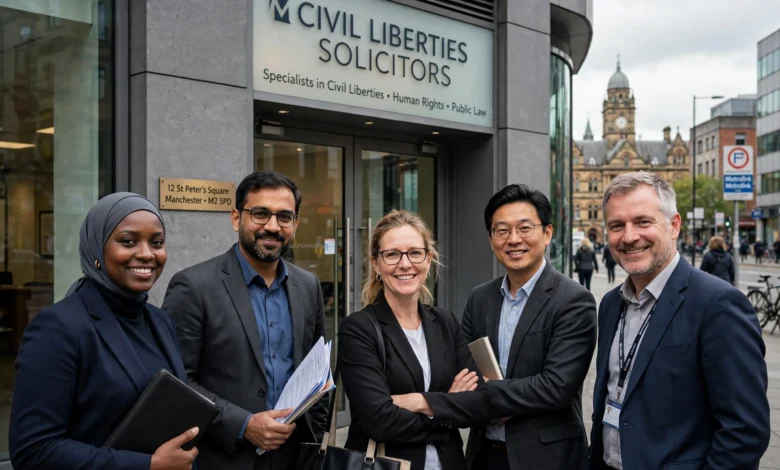
The right to protest sits at the heart of a functioning democracy, and it’s a right people in Greater Manchester exercise often, from city centre marches to smaller community demonstrations outside local council offices. But knowing you have a right to protest is different from understanding what that right actually protects, and where it ends. This is where Manchester civil liberties solicitors come in.
Protest law in England and Wales has shifted considerably in recent years. New police powers, changes brought in under the Police, Crime, Sentencing and Courts Act 2022, and the Public Order Act 2023 have all reshaped what’s permitted at a demonstration and what can lead to arrest. For anyone planning to attend a march, organise a rally, or simply exercise their right to gather in public, it pays to know where the legal boundaries actually sit.
This article walks through what assembly rights and protest rights mean in practice, what powers the police hold, and when it’s worth speaking to a solicitor who specialises in civil liberties law. Whether you’ve been arrested at a demonstration, had your placard confiscated, or you’re simply trying to plan a lawful protest in Manchester city centre, understanding your legal footing before you need it can make a real difference. We’ll also cover kettling, stop and search powers, and how to find the right legal support if things go wrong on the day.
What Are Protest and Assembly Rights in the UK?
The right to protest in the UK isn’t written into a single piece of legislation the way it is in some countries. Instead, it’s built from a combination of common law, the Human Rights Act 1998, and specific public order legislation. Two articles of the Human Rights Act matter most here:
- Article 10 protects freedom of expression, including the right to express political and social views publicly.
- Article 11 protects freedom of assembly and association, meaning the right to gather with others peacefully.
These rights aren’t absolute. Both articles allow the state to impose restrictions where necessary for public safety, prevention of disorder, or protection of the rights of others. That balancing act is exactly where disputes tend to arise, and why civil liberties solicitors spend so much of their time arguing over whether a restriction was genuinely necessary or went further than the law allows.
For a full breakdown of how these rights are framed in law, the Human Rights Act 1998 text on legislation.gov.uk is worth reading directly rather than relying on summaries.
Peaceful Assembly vs Unlawful Assembly
Not every gathering counts as a protected assembly. The law draws a line between peaceful assembly and gatherings that tip into disorder. A protest remains lawful for as long as it stays peaceful, even if it’s noisy, disruptive to traffic, or unpopular with bystanders. What changes the picture is:
- Violence or the threat of violence towards people or property
- Deliberate obstruction that goes beyond incidental disruption
- Breach of specific conditions imposed by police under public order legislation
- Refusal to disperse after a lawful order has been given
If you’re arrested at a protest that you believe was entirely peaceful, this distinction is usually the first thing a solicitor will examine.
Police Powers at Protests: What Officers Can and Cannot Do
Greater Manchester Police, like every force in England and Wales, operates under the Public Order Act 1986, as amended by more recent legislation. Understanding these powers helps you recognise when they’re being used correctly and when they might be overstepped.


Conditions on Protests
Police can impose conditions on a public assembly or procession if a senior officer reasonably believes it may result in serious public disorder, serious damage to property, or serious disruption to the life of the community. Conditions can cover:
- The route a march takes
- The maximum number of participants
- The duration of the demonstration
- The location where a static protest can be held
Since the Public Order Act 2023 came into force, police have also been given powers to impose conditions based on the cumulative impact of protests, including noise levels that cause “serious unease, alarm or distress” to bystanders. This is one of the more contested areas of current protest law, and it’s the subject of ongoing legal challenges from human rights organisations, including Liberty, which continues to campaign on this issue and publishes regularly updated guidance for protesters.
Stop and Search Powers
Police can use stop and search powers at protests in specific circumstances, most notably under Section 60 of the Criminal Justice and Public Order Act 1994, which allows officers to search anyone in a designated area without needing reasonable suspicion, provided a senior officer has authorised its use in anticipation of violence. This power has drawn criticism for how it’s applied at demonstrations, and disproportionate use against particular groups has been raised repeatedly by civil liberties campaigners.
Kettling and Containment
“Kettling,” the practice of containing a crowd within a police cordon for a period of time, remains lawful in narrow circumstances, following the House of Lords ruling in Austin v Commissioner of Police of the Metropolis. But it isn’t a power the police can use freely. It has to be a proportionate response to a real risk of disorder, and it can’t be used simply to punish or deter protesters who haven’t done anything wrong. If you’ve been kettled at a demonstration in Manchester and believe it was disproportionate, this is a strong area to raise with a solicitor.
Arrest and Detention
Arrest at a protest usually happens under one of these grounds:
- Breach of the peace
- Obstruction of the highway
- Failure to comply with conditions imposed on the protest
- Obstruction of a police officer
- Public order offences such as affray or violent disorder
If you’re arrested, you’re entitled to free and independent legal advice at the police station, regardless of what you’re accused of. Asking for a solicitor isn’t an admission of guilt, and exercising that right doesn’t make you look worse to police or the courts.
Why You Might Need Manchester Civil Liberties Solicitors
There are several situations where specialist legal advice becomes genuinely important rather than just reassuring.
Arrest at a Demonstration
If you’ve been arrested during or after a protest, Manchester civil liberties solicitors can attend the police station with you, advise you before interview, and challenge the legal basis of the arrest if it wasn’t properly justified. Getting advice early, ideally before you say anything in interview, often shapes how the rest of the case unfolds.
Challenging Unlawful Police Conduct
If you believe police used excessive force, applied conditions that weren’t legally justified, or searched you without proper grounds, a solicitor can help you pursue a formal complaint or, in more serious cases, a civil claim against the police. This can include claims for:
- Wrongful arrest or false imprisonment
- Assault by a police officer
- Unlawful search
- Breach of your Article 10 or Article 11 rights
Judicial Review of Protest Bans or Conditions
Where police or local authorities impose blanket bans or unusually restrictive conditions on a planned protest, it’s sometimes possible to challenge that decision through judicial review before the event even takes place. This is a specialist area, and timing matters enormously, so early legal advice is essential if you’re organising a demonstration and conditions have been imposed that you believe are disproportionate.
Advice Before Organising a Protest
Getting advice before an event, not just after something goes wrong, is often the most useful time to speak to a solicitor. A short consultation on your legal position, what police can and can’t require of you, and how to document the event properly can prevent problems from arising in the first place.
How Manchester Civil Liberties Solicitors Support Protesters
A solicitor working in this field typically offers support across several stages:
- Pre-protest advice – explaining your rights, what conditions might legally apply, and how to prepare
- Police station representation – attending in person or by phone if you’re arrested and detained
- Case review – examining whether the arrest, search, or use of force was lawful
- Court representation – defending you if you’re charged with a public order offence
- Civil claims – pursuing compensation where police have acted unlawfully
- Complaints handling – submitting formal complaints to the force or the Independent Office for Police Conduct
Good representation in this area isn’t just about defending against charges. It’s about understanding the broader legal framework well enough to spot when a power has been misused, and being willing to push back on that in a way that holds up in court.
Choosing the Right Solicitor for Protest and Assembly Cases
Not every criminal defence firm has depth of experience in civil liberties and public order law specifically. When looking for representation in Manchester, it’s worth checking for:
- A track record of handling protest-related arrests and public order offences
- Experience with judicial review and human rights claims, not just criminal defence
- Familiarity with local Greater Manchester Police practices and custody procedures
- Membership of relevant accreditation schemes, such as the Law Society’s police station accreditation
- A willingness to act quickly, since protest-related legal issues are often time sensitive
Many firms in this space also work closely with organisations such as Liberty and Amnesty International, which can be a useful indicator of genuine specialism rather than general criminal defence experience being stretched to cover a niche area.
Questions Worth Asking Before You Instruct a Solicitor
- Have you handled cases specifically involving Section 60 stop and search or kettling?
- Can you attend the police station outside normal working hours?
- Do you offer free advice under the police station duty scheme?
- Have you brought or defended judicial review claims related to protest conditions?
- What’s your approach if the case involves a civil claim against the police as well as a criminal charge?
Asking these questions early saves time and helps you find someone genuinely equipped to handle a protest-related case, rather than someone learning the area as they go.
Practical Steps to Protect Yourself at a Protest
Regardless of whether you ever need legal representation, a few practical habits reduce risk and make it far easier for a solicitor to help you later if something does go wrong.
- Know the route and any conditions in advance. If police have imposed conditions on a march or assembly, organisers are usually required to communicate them. Read them properly.
- Keep a phone charged and carry a solicitor’s contact number written down, in case your phone is confiscated or runs out of battery.
- Avoid confrontation with officers, even if you believe a power is being misused. Comply, note details, and raise the issue afterwards through a complaint or legal advice.
- Note badge numbers and details of any officer involved in an incident, along with the time and location.
- If arrested, ask for a solicitor immediately and say as little as possible until you’ve had legal advice.
- Photograph or film incidents where safe to do so, since evidence gathered on the day is often central to any later legal challenge.
These steps won’t prevent every problem, but they make a genuine difference to how a case unfolds afterwards.
The Bigger Picture: Why Assembly Rights Matter
Protest and assembly rights aren’t just abstract legal principles. They’re the mechanism through which ordinary people hold power to account, whether that’s a national government, a local council, or a private company. Restrictions on these rights tend to expand quietly, through incremental legislative changes and broadening police powers, rather than through a single dramatic shift.
That’s part of why organisations focused on civil liberties keep such close watch on how these powers are used in practice, and why legal challenges brought by individuals and solicitors matter beyond the specific case in question. Each case that successfully challenges an overreach helps set the boundary for everyone else.
For anyone in Manchester who values the right to gather, speak, and be heard publicly, knowing where to turn for legal advice isn’t just useful for the day something goes wrong. It’s part of understanding what these rights actually mean in practice.
Conclusion
The right to protest and assemble is protected under UK law, but it’s a right that comes with real limits and increasingly complex police powers attached to it. From conditions imposed on marches to stop and search authorisations and the use of kettling, the legal landscape around demonstrations in Manchester has become harder to navigate without proper advice.
Manchester civil liberties solicitors play a genuinely important role here, not just in defending people after arrest, but in advising organisers beforehand, challenging unlawful police conduct, and holding public authorities to the legal standards they’re supposed to meet. If you’re planning to protest, organising a demonstration, or you’ve already had a difficult experience with police at one, getting proper legal advice early is one of the most useful things you can do to protect both yourself and the wider right to protest.